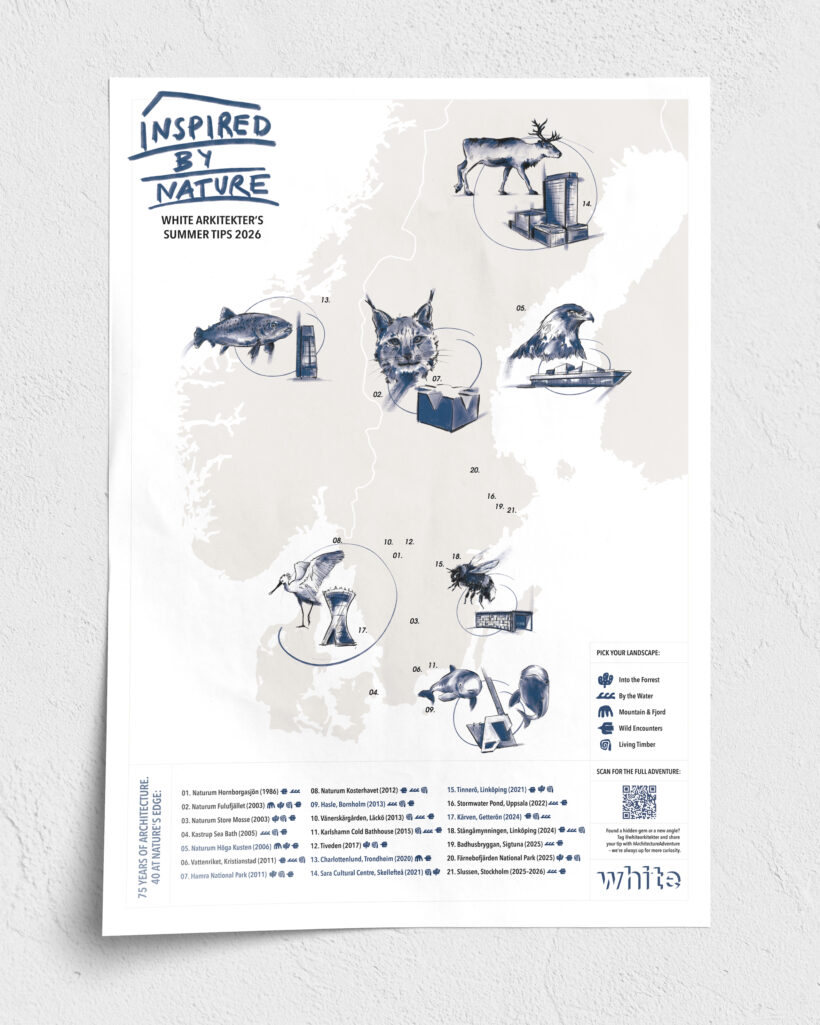
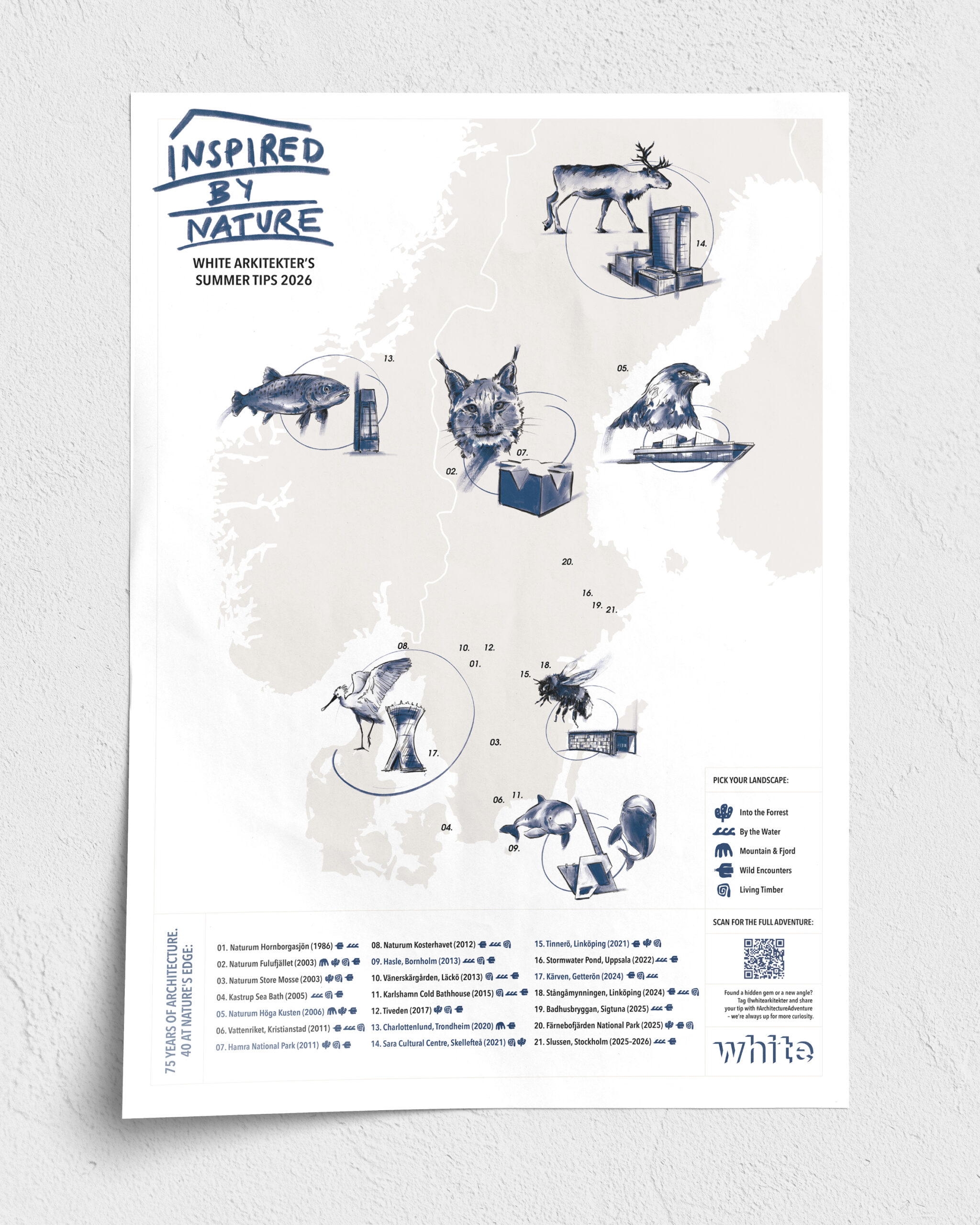
The best architecture doesn’t always ask for your attention. Sometimes it points you toward something bigger – a waterfall, a wetland, a coastline at sunset. Sometimes it is the destination. And sometimes it simply makes a place more itself, more accessible, more alive, more worth the journey. White Arkitekter turns 75 this year. For four of those decades, we have been building at nature’s edge, with the landscape always in charge.

This summer, follow the map to places built for exactly this: long days, open air, and the kind of curiosity that leads you somewhere wilder.

Follow the map – and let nature lead

A curated guide to places where architecture meets nature. Save it to your phone – or print it in A2 or A3 and pin it where the wild things are.

This year’s map features 21 destinations. Seven of them are home to a wild neighbour that shares its landscape with the architecture. The best architecture leaves room for everyone. Scroll down to meet them.

Explore the map – digital version

Explore the map – print version

Wild Encounters

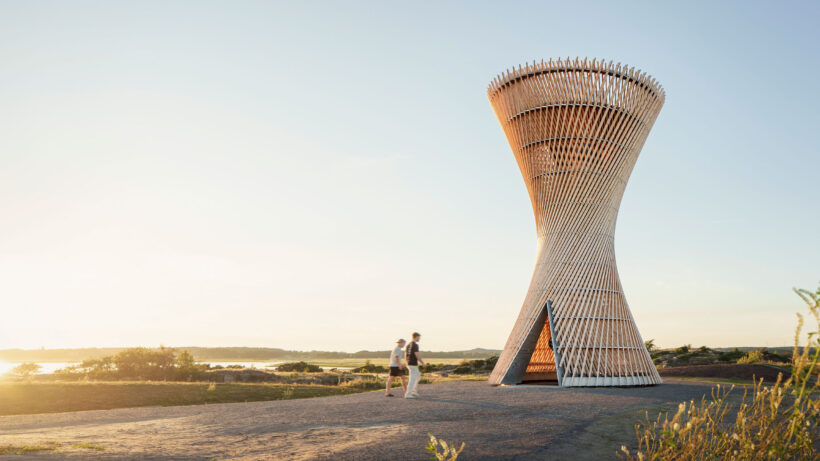
Kärven Observation Tower at Getterön

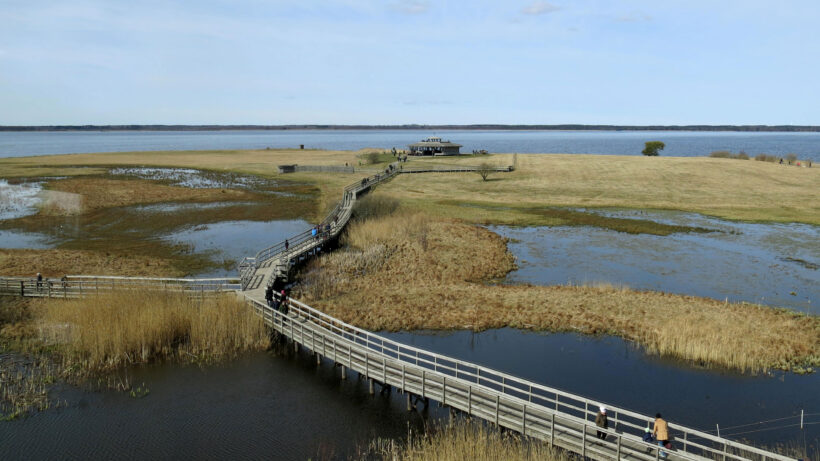
In the Getterön nature reserve north of Varberg, sea and land meet in a teeming wetland with a rich bird life. The Kärven bird observation tower is a three-dimensional puzzle that enhances the value of the site and creates a stimulating environment for curious visitors. A treat for the lucky few: the Eurasian Spoonbill! Completed 2024.

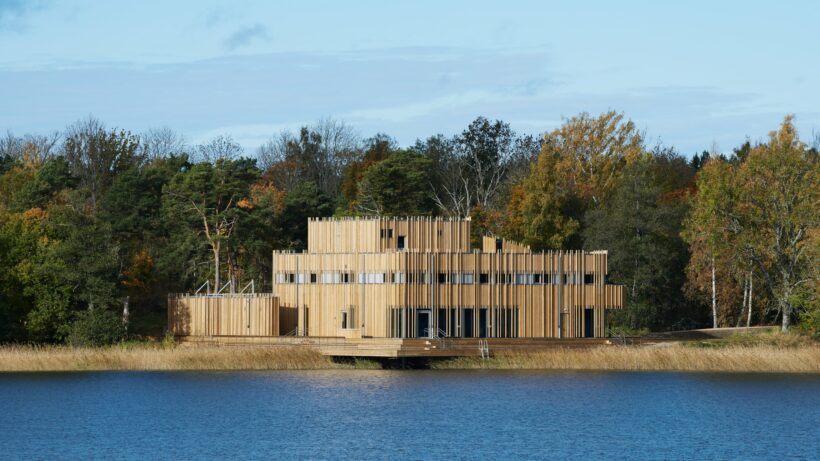
Stångåmynningen, Linköping

A visitor shelter, bird tower and jetty sit at the edge of Stångåmynningen, where the river meets Lake Roxen. A quiet spot for watching goosanders, white-tailed eagles and the wider wildlife of this remarkably rich stretch of water. Completed 2024.

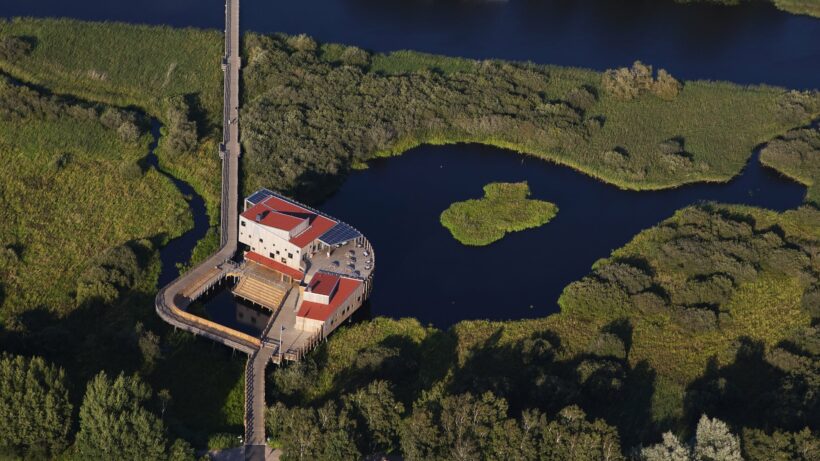
Vattenriket in Kristianstad

A UNESCO-listed wetland biosphere, this summer also represented at Biennale Architettura 2025 in Venice, is home to hundreds of bird species. From cranes to sea eagles almost in the middle of the city. One of Europe’s richest bird habitats, where nature and conservation meet. Completed 2011.

By the water

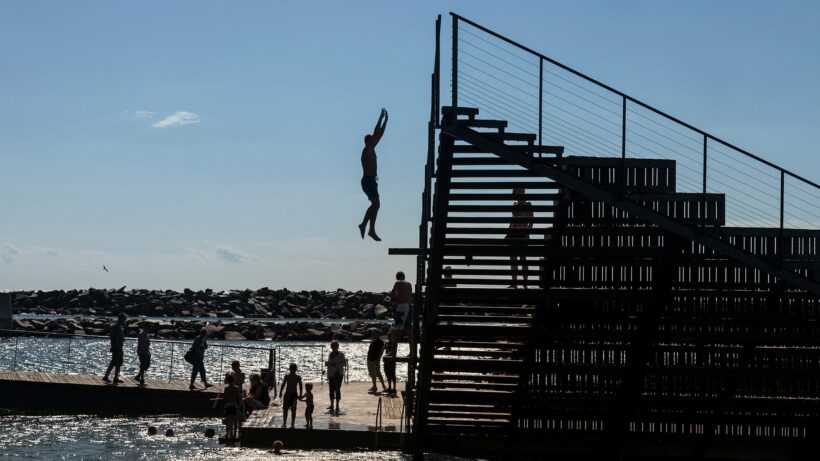
Hasle Harbour Bath

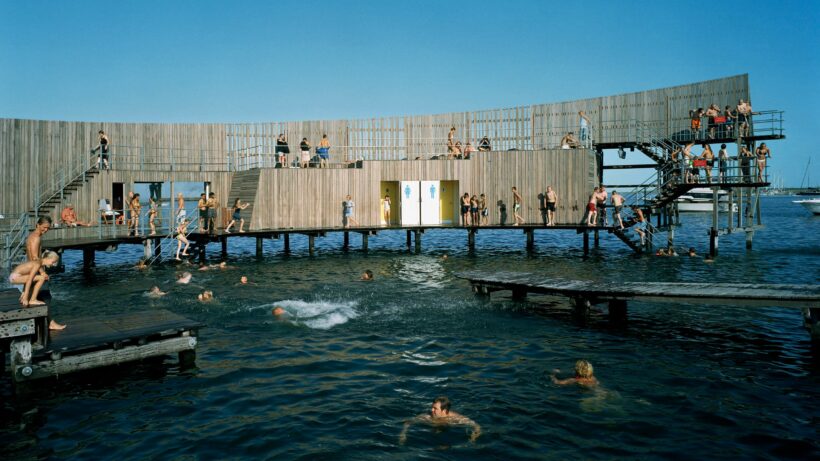
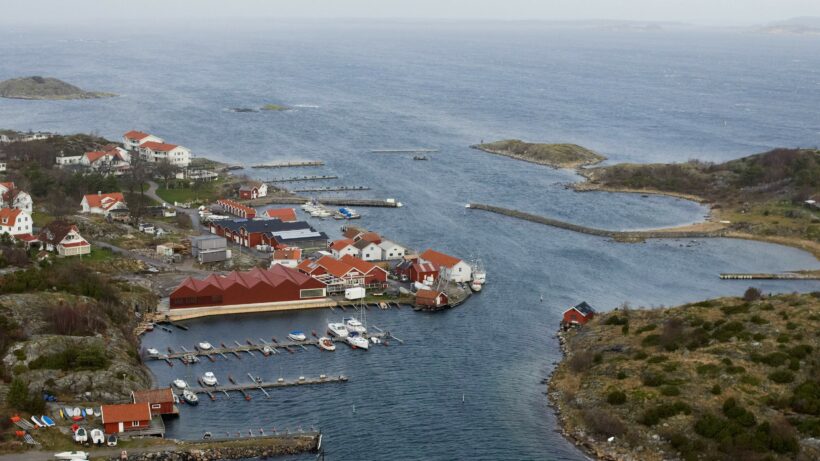
On the Danish island of Bornholm, the small port town of Hasle is renowned for its lingering sunsets. A social gathering point in the water, where people of all ages and abilities can bathe, relax and enjoy the spectacular sea views and sunsets. Completed 2013.

Kastrup Sea Bath

Kastrup Sea Bath is one of many architectural gems of København’s Ørestad region. Conceived as a fully-accessible outdoor swimming facility, Kastrup Sea Bath transformed an overlooked brownfield site into one of Denmark’s most enchanting, recognisable and popular leisure destinations. Completed 2005.

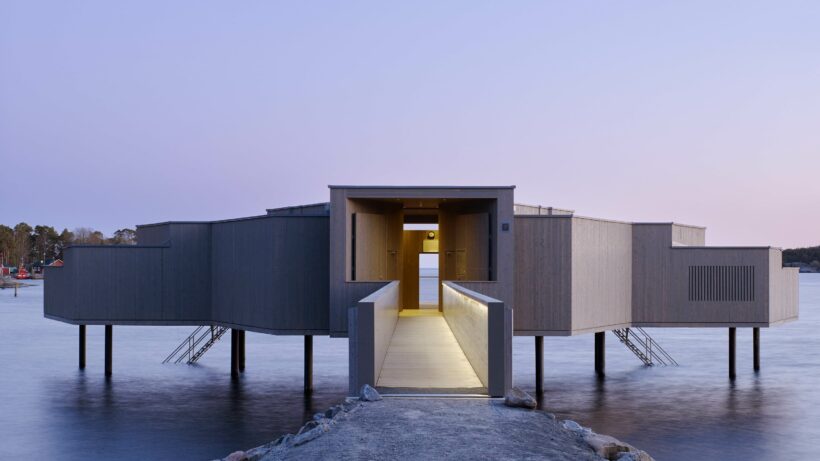
Badhusbryggan at Sigtuna

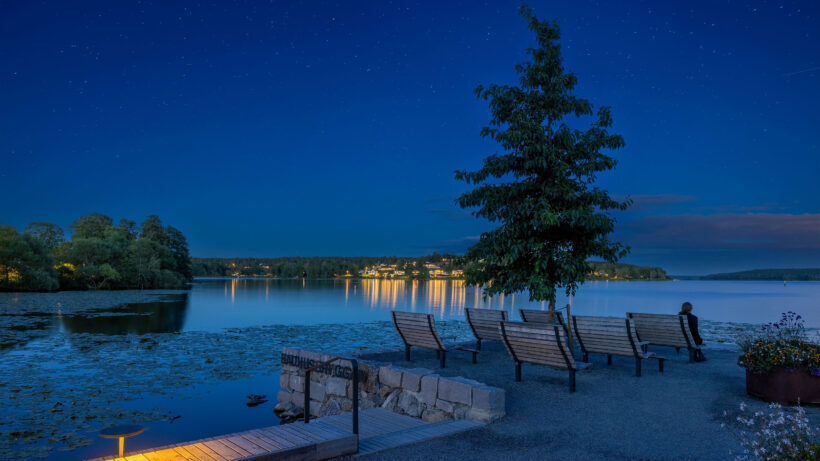
A new gathering place has taken shape on the Mälaren waterfront in Sigtuna, on the site of the town’s former cold-water bathhouse. The design draws on the particular qualities of the place – its southerly aspect, open water views and layered history – to restore something the town has long been missing: a place to meet by the water. Completed 2025.

Into the forest

Hamra Nationalpark by Henrik Lindvall

Hamra National Park & the Crown Jewels

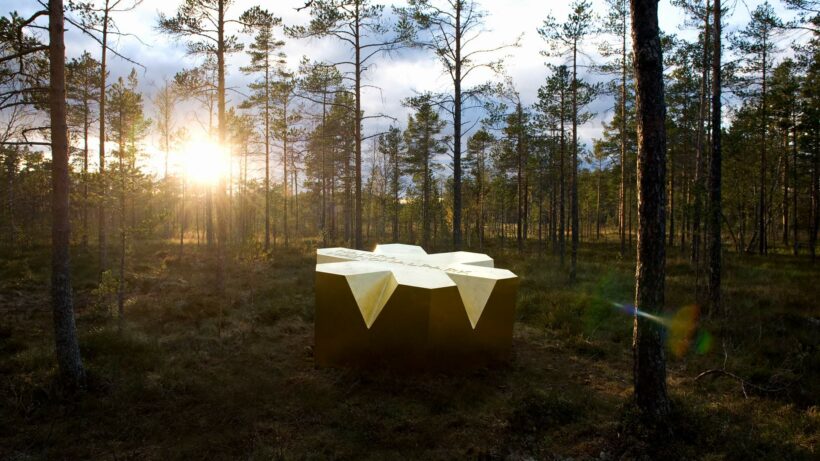
Hamra National Park was the site of a special pilot to test an award-winning visual identity concept, intended for implementation across all Swedish National Parks. The goal was to encourage more people to experience the beauty of national parkland, while taking ownership of these national treasures. Completed 2011.

Naturum Store Mosse

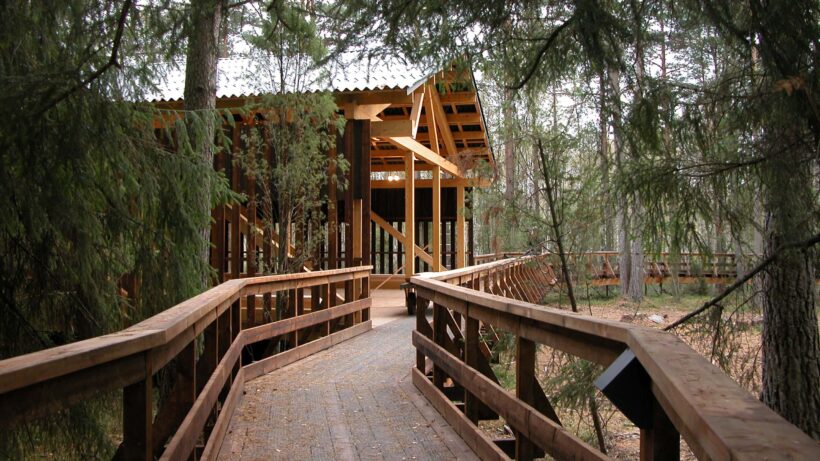
Naturum Store Mosse is a visitor centre that transports guests into the heart of folklore, while recanting the tale of the region’s 14,000 year history; from Ice Age to present day. Completed 2003.

Tiveden National Park

In one of the most inaccessible parts of the Swedish wilderness lies Tiveden National Park. Designing the park’s expansion and three new entrances in a place where barely a foot has tread is a delicate task. Combining a variety of natural habitats, these gateways gently guide visitors into untouched nature, with minimal impact. Completed 2017.

By the water

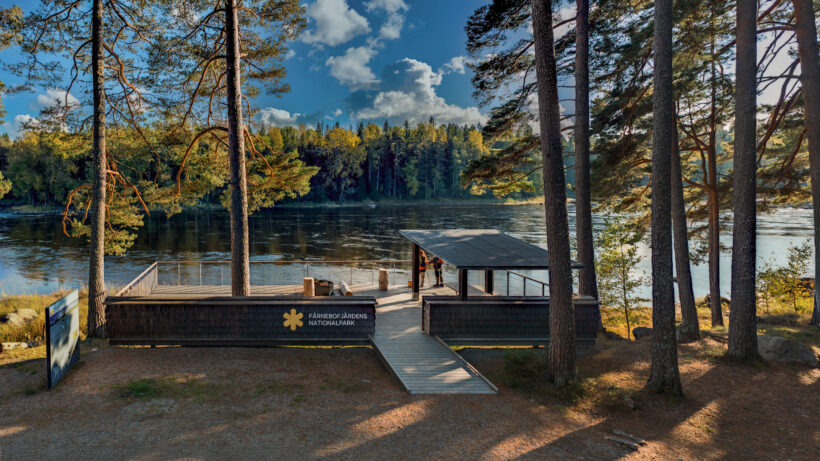
Färnebofjärden National Park

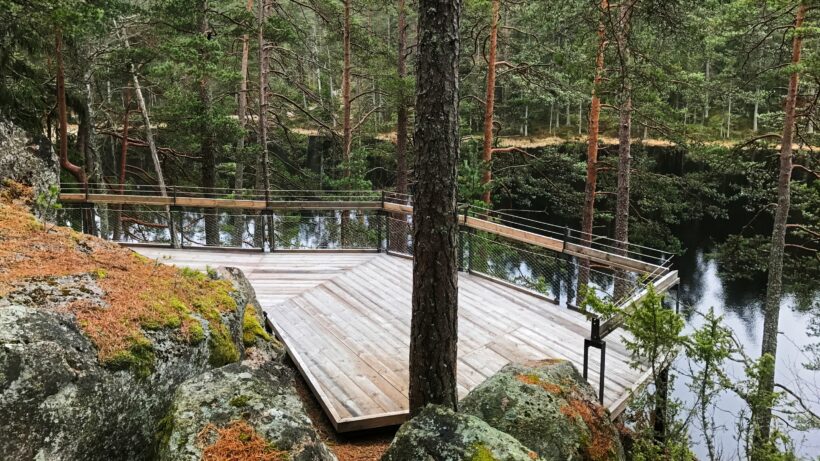
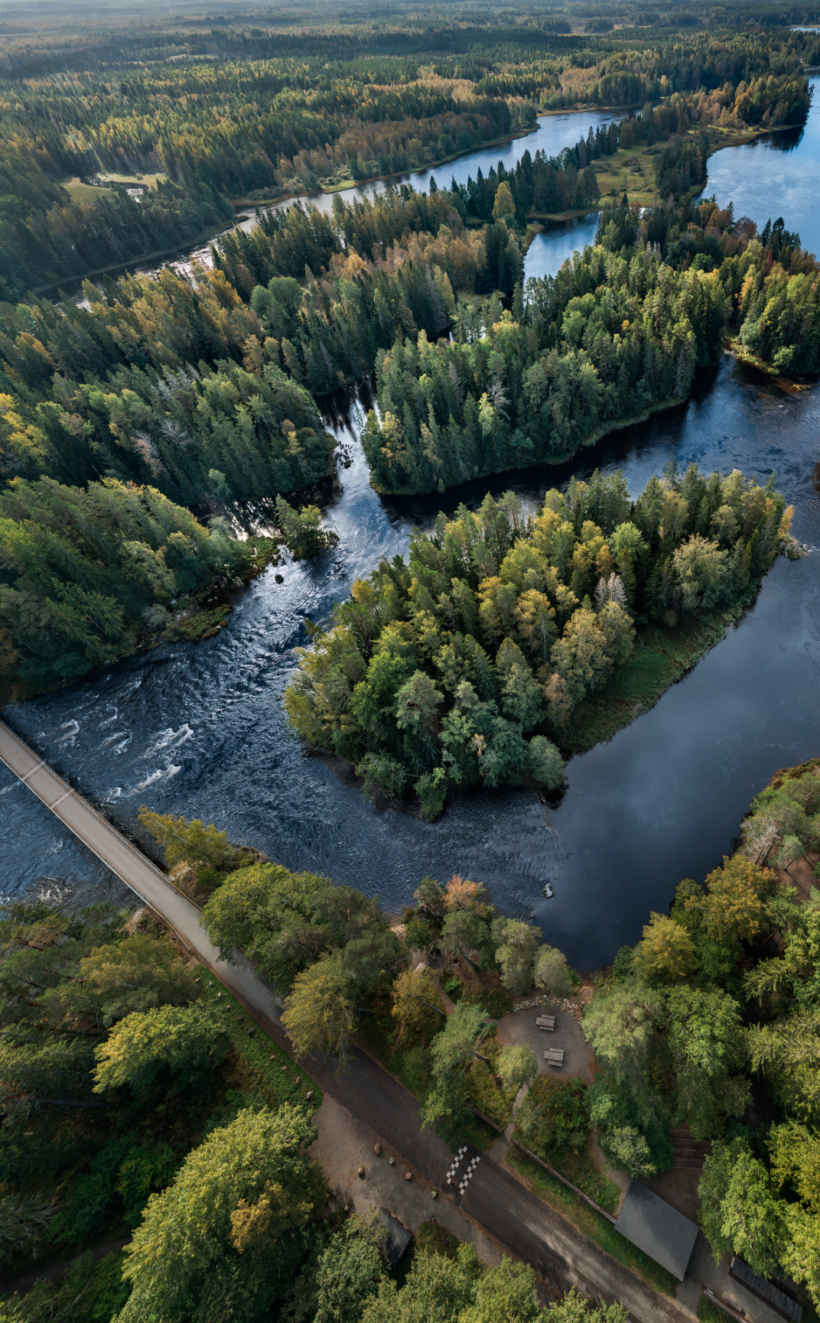
Four new entrance areas draw visitors into the vast river landscape of Färnebofjärden National Park, each shaped by the particular character of its site along the Dalälven. Shelters, viewing platforms and trails open up a landscape of exceptional ecological richness – designed for all, and built to last. Completed 2025.

Slussen in Stockholm

Where the City Meets the Water – and an Otter. Newly transformed, Slussen’s Vattentorget offers a front-row seat to the shifting tides between Lake Mälaren and the Baltic – a junction where architecture, water and city life converge. A recent and very welcome local celebrity: Bernadutter the otter, spotted in the new fish migration tunnel and named by public vote. Part of the ongoing Slussen transformation, completed 2025–2026.

Stormwater Pond in Uppsala

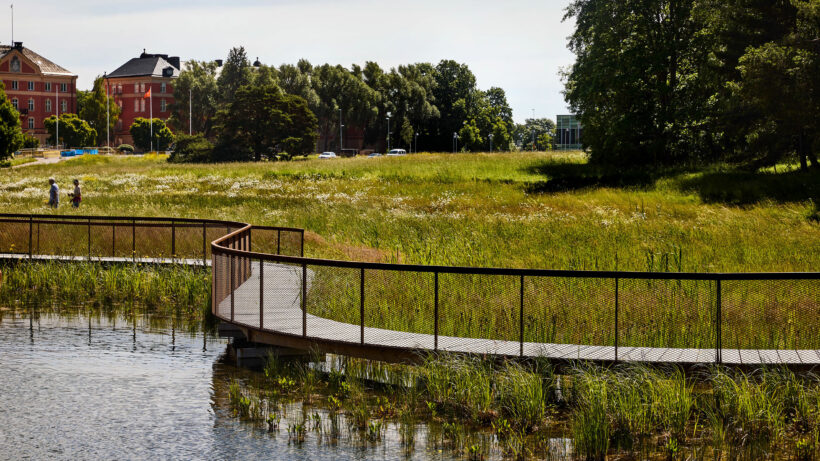
As our cities expand, so does the need to clean the dirty water from them and protect them from flooding. The new stormwater pond at Exercisfältet in Uppsala solves both problems, while contributing to biodiversity and creating a place where people can socialize and go for a stroll. Completed 2022.

Living Timber

Sara Cultural Centre in Skellefteå

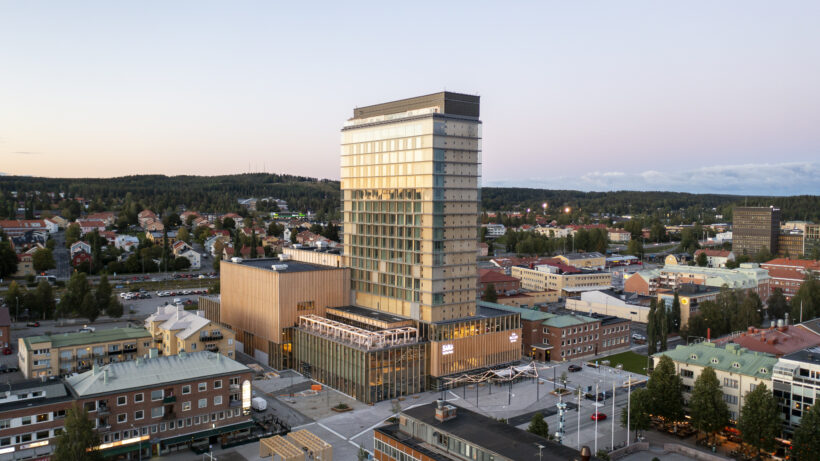
Housing venues for arts, performance and literature as well as a hotel, Sara Cultural Centre is one of the world’s tallest timber buildings to date. Located just below the Arctic Circle in northern Sweden, Skellefteå has a long tradition of timber building and the raw material of the building is sourced from forests in the region. Completed 2021.

Karlshamn Cold Bathhouse

Karlshamn’s open-air bath (kallbadhus) is more than just a place for a dip – it’s a ritual rooted in rhythm, resistance and recovery. The design embraces the vastness of the sea while offering shelter from the wind, letting bathers move between cold and warmth, openness and stillness. Completed 2015.

Vänerskärgården Visitor Centre – Victoriahuset, Läckö

Vänerskärgården Visitor Centre – Victoriahuset is a building designed to educate and remind people of the riches of Europe’s largest freshwater archipelago. Across the bay shines the baroque grandeur of Läckö Castle, attracting a large number of visitors every year. Completed 2013.

Mountain & Fjord

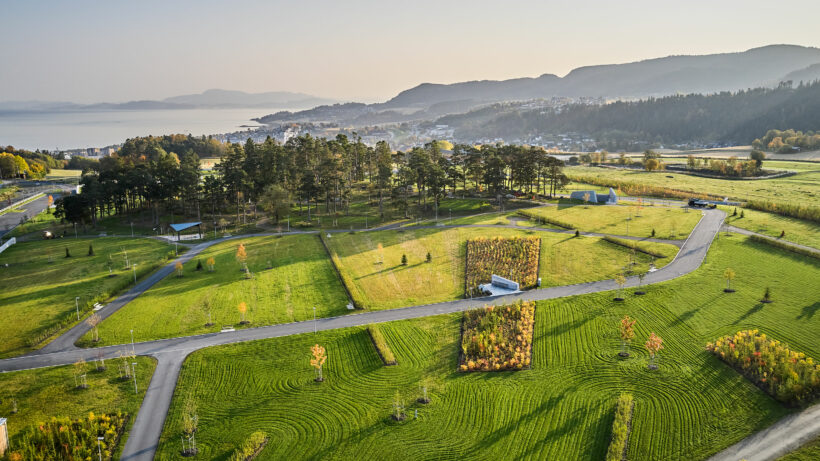
Charlottenlund in Trondheim

On the outskirts of Trondheim lies Charlottenlund cemetery – a faith-neutral place that is imbued with a poetic character and exudes an atmosphere that anchors the cemetery in its location between city and country, between mountain and fjord. Completed 2020.

Naturum Höga Kusten

In the shadow of the mighty Skuleberget lies a remarkable building inspired by the surrounding nature. Höga Kusten Visitor Centre is the result of ‘geological surgery’ – a precise cut straight into the ancient mountain. Completed 2006.

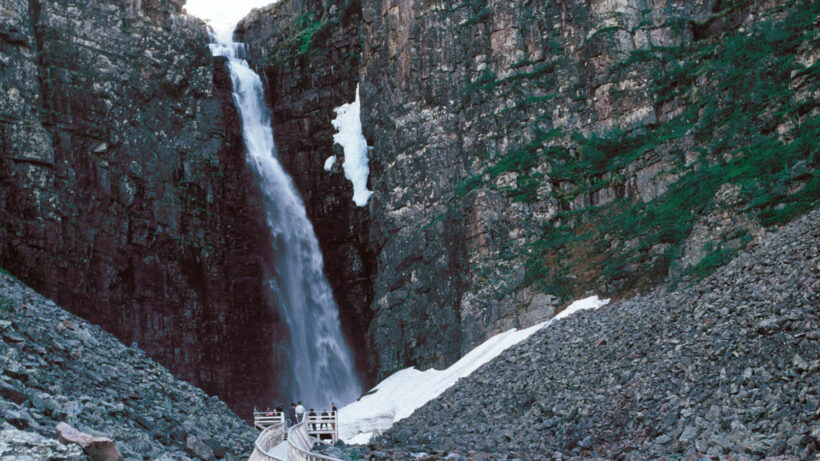
Fulufjället Visitors Center in Dalarna

Fulufjället Visitor Centre in western Dalarna serves as an inspiring gateway and educational guide to majestic landscapes and wilderness. The building is subtly nestled in the Fulufjället National Park, famous for Sweden’s highest waterfall, ancient forests and ravines. It is a humble building in a dramatic setting. Completed 2003.

Wild Encounters

Tinnerö – Entrance Building and Insect Hotel

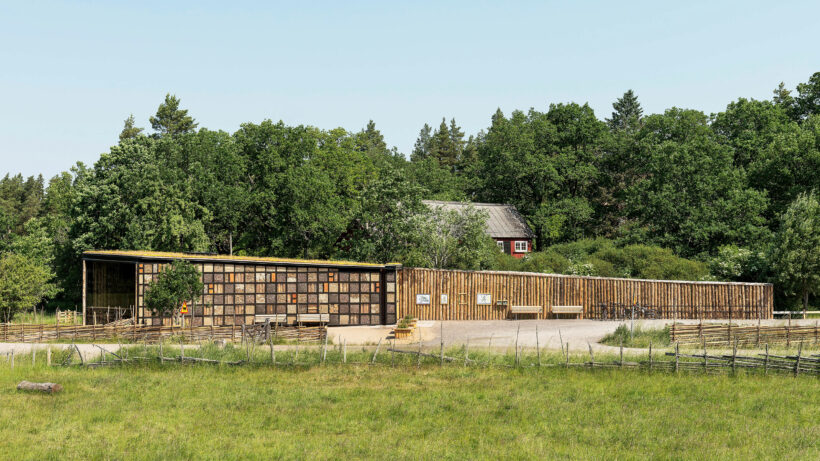
Just outside Linköping you’ll find Tinnerö, one of Sweden’s most species-rich nature reserves. In the midst of this teeming life, at the intersection of oak and lake landscapes, we have now completed what is probably Scandinavia’s largest insect hotel. Completed 2021.

Naturum Hornborgasjön

Every spring, tens of thousands of cranes gather at Lake Hornborgasjön – one of the great wildlife spectacles of northern Europe. Perched on stilts at the water’s edge, connected by footbridges through the reeds, this octagonal building with its lookout tower set the principles still guiding naturum design today: site-specific, ecologically grounded, architecture with nature as its client. Completed 1986.

Naturum Kosterhavet

Naturum Kosterhavet is a contemporary reinvention of the marine vernacular – an architectural threshold to Sweden’s first marine national park. Inside, visitors can observe sealife up-close in the aquarium; outside, the building serves as a base for exploring beaches, trails and snorkelling paths through the country’s only coral reef, still growing. Step inside – or dive in – and discover a world rarely seen from shore. Completed 2012.

Five ways to let nature lead this summer

1. Follow the animals

Let wildlife be your guide this summer. Spot an osprey over a river delta, a seal on a coastal rock, or – if you’re very lucky – an otter in a fish migration tunnel.

2. Find your forest

Step into the trees and slow down. Whether it’s old-growth wilderness or an urban timber building, notice how wood shapes the air around you.

3. Eat where nature leads

Seek out outdoor markets, shoreside cafés and farm stays – and let the landscape decide what’s on the menu.

4. Leave lighter than you arrived

Pick up litter on a beach walk, stick to marked paths in national parks, and take only photos. The best architecture teaches us the same thing.

5. Pack for the wild

Sunscreen, water, sturdy shoes – and binoculars. You never know what’s waiting just beyond the treeline.

Wishing you a wild and wonderful summer!

The wildlife of Inspired by Nature

This year’s map features 21 destinations. Seven of them are home to a wild neighbour that shares its landscape with the architecture. The best architecture leaves room for everyone.

1. Reindeer (Rangifer tarandus) above Sara Cultural Centre, Skellefteå

The reindeer has roamed the forests and fells of northern Sweden for thousands of years. Semi-domesticated by the Sámi people, it remains inseparable from the Arctic landscape – and from the culture that depends on it.

2. White-tailed Eagle (Haliaeetus albicilla) over Naturum Höga Kusten

Once on the brink of extinction in Sweden, the white-tailed eagle has made a remarkable comeback. Today it soars over the High Coast’s ancient mountain landscape – a living measure of what conservation can achieve.

3. Eurasian Spoonbill (Platalea leucorodia) at Kärven, Getterön

One of Sweden’s rarest breeding birds, the spoonbill sweeps its distinctive bill through the shallows of Getterön’s wetland in search of food. A treat for the lucky few.

4. Harbour Porpoise (Phocoena phocoena) off Hasle Havsbad, Bornholm

The Baltic Sea’s only native cetacean – and one of its most endangered. Small, shy and rarely seen, it surfaces briefly before disappearing again into dark water.

5. Eurasian Lynx (Lynx lynx) in Hamra National Park

Scandinavia’s largest wild cat moves through old-growth forest without a sound. Elusive and rarely seen, the lynx is a sign that an ecosystem is intact – and that wilderness still exists.

6. Bumblebee (Bombus spp.) at Tinnerö, Linköping

One of nature’s most important pollinators – and one of its most threatened. At Tinnerö, Scandinavia’s largest insect hotel was built to give wild bees and insects a place to thrive in one of Sweden’s most species-rich oak landscapes.

7. Sea Trout (Salmo trutta) outside Charlottenlund, Trondheim

The sea trout migrates between river and fjord, following a cycle as old as the landscape itself. In Norwegian coastal waters, populations are under increasing pressure from fish farming and habitat loss.