As cities grow and consumption rises, ecosystems face increasing pressure. The impacts of climate change – including rising water levels, heavier rainfall, and higher temperatures – pose significant risks. To prevent the loss of biodiversity and reduce our climate footprint, it is essential to integrate nature-based solutions into the built environment. The way we design urban spaces shapes how sustainable a city can be – environmentally, socially, and economically – and by working with nature’s own systems, we can create resilient, flexible, and healthy environments for both people and wildlife.

Nature’s principles shaping the city

At White Arkitekter, we draw on ecosystem services to manage climate risks and strengthen biodiversity. Through nature-based solutions, we create multifunctional spaces for people, animals, and plants – spaces where nature is an active part of the solution.

We are inspired by nature’s intelligence, letting natural processes, materials, and cycles guide our architecture in ways that give back. These solutions create environments that support cleaner air, richer habitats, enhanced wellbeing, and social connections, while also mitigating the effects of climate change.

Our Expertise in Nature-Based Solutions
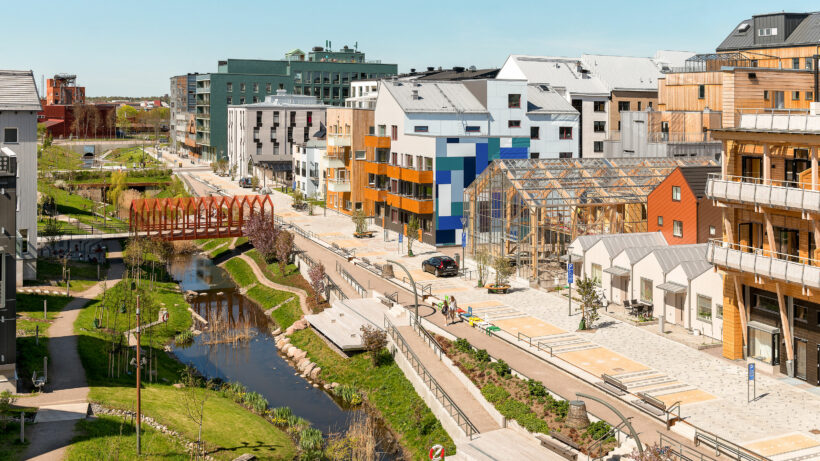
Ecosystem services

Smart urban planning is planning that integrates nature as optimally as possible. Resilient ecosystems provide essential ecosystem services that support our survival, health, and quality of life. Nature-based solutions have been shown to outperform equivalent technical solutions, often generating positive synergies through their multifunctional character. Biodiversity underpins all other ecosystem services – we therefore work actively to strengthen it, enhancing our projects and laying the foundations for resilient ecosystems.

To support ecosystem services and climate adaptation, we offer:

  • Landscape design tailored to a site’s unique qualities, biodiversity, and climate resilience
  • Assessments, strategies, and inventories for ecosystem services
  • Climate risk and adaptation analyses
  • Microclimate and environmental simulations (wind, water, sun, temperature)
  • Sustainability and ecological performance evaluations

And more…

Our ecosystem services

Climate risk analysis and adaptation

Climate change increases the risk of extreme weather events that threaten people and built structures alike. By analysing vulnerability and exposure early in the design process, we can develop robust and resilient solutions.

In urban and landscape projects, we identify risks affecting soil, buildings, and infrastructure, and through regenerative design, we integrate both technical and nature-based solutions to create sustainable and resilient urban landscapes.

To support climate adaptation, we offer:

  • Landscape design focused on the site’s unique characteristics and climate resilience
  • Climate risk analyses
  • Climate modelling for outdoor environments

And more…

Our climate risk services

Selected projects

All Projects

Loading...

Glossary

How Are These Concepts Connected?

Regenerative design, nature-based solutions, ecosystem services, biodiversity, climate adaptation, and climate risks – how do they all relate?

Here is a brief introduction to these concepts and how we at White Arkitekter put them into practice:

Regenerative Design

Regenerative design is White’s vision and guiding principle across all our architecture. We create sustainable solutions that do more than simply minimise negative impacts – they actively strengthen natural ecosystems and generate social value.

Ecosystem Services

Ecosystem services (ES) are the functions and processes provided by nature that benefit people – such as clean air, pollination, water purification, and increased resilience to heavy rainfall. At White, ecosystem services are a central starting point for managing climate risks and enhancing biodiversity.

Nature-Based Solutions

Through nature-based solutions, we translate ecosystem services into architecture and design. This involves creating multifunctional spaces where people, animals, and plants coexist – and where nature becomes an active part of the solution.

Swedish Environmental Protection Agency definition: “Nature-based solutions are multifunctional and cost-effective measures to address various societal challenges by protecting, enhancing, or creating ecosystems – while promoting biodiversity and human wellbeing.”

Interested in learning more? Get in touch!

Martin Ehn Hillberg

Martin Ehn Hillberg

Landscape Architect, Business Development Nature-based Solutions

Louise Didriksson

Louise Didriksson

Landscape Architect, Development manager

Anna Graaf

Anna Graaf

Sustainability Specialist, Sustainability director