Healing through Design: A Whole-Child Approach to Healthcare Architecture

Lienelle Geldenhuys, Associate Director at White Arkitekter in London, details how architecture can actively contribute to healing and wellbeing, especially for children and young people, as illustrated by the design philosophy and approach behind Cambridge Children’s Hospital.

I’ve long believed that buildings have a profound role to play in healing, not just supporting clinical care but actively promoting wellbeing. That belief has been central to our design for Cambridge Children’s Hospital (CCH).

As architects working in healthcare, many of us are familiar with Roger Ulrich’s seminal research on the role of nature, daylight, and views in improving patient outcomes. Designing buildings that allow in natural light and offer contact with nature should now be considered a baseline, not a bonus. At CCH we set out to go further.

Studies have shown, for example, that biophilic design can significantly increase visual attention and mental focus in preschoolers, and that using wood in interiors, even in school settings, can lower children’s stress and improve their engagement.

Our design supports a truly integrated model of care that combines physical and mental health services for children and young people under one roof. This pioneering vision from our client, Cambridge University Hospitals, Cambridgeshire and Peterborough NHS Foundation Trust, and the University of Cambridge, called for more than just a well-lit and efficient hospital. It demanded an environment that actively supports children’s whole lives: their bodies, minds, emotions and identities.

To meet this ambition, we drew not only on established evidence-based design principles, but also on a growing body of child-centred research into how young people experience healthcare environments. The results were striking. Studies have shown, for example, that biophilic design can significantly increase visual attention and mental focus in preschoolers, and that using wood in interiors, even in school settings, can lower children’s stress and improve their engagement.

Play enhances children’s wellbeing, creativity and social development, while access to outdoor play reduces stress and supports emotional regulation.

Avoiding clinical austerity

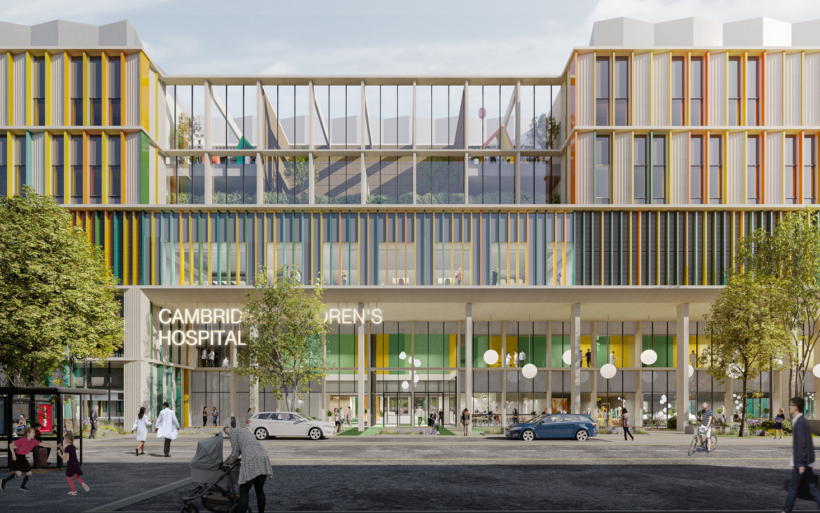
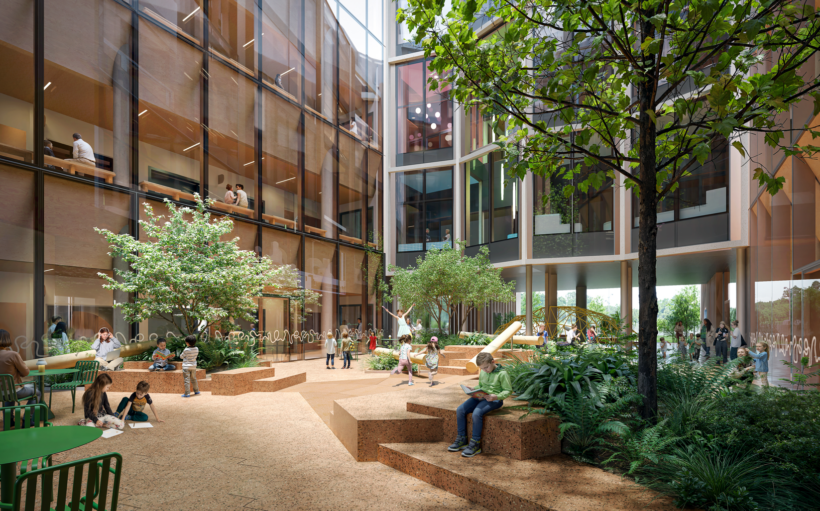
Other studies highlight how light, colour and space matter to children. During our patient engagement workshops, the children described their ideal hospital as warm, bright, cheerful, colourful, and imaginative, a place that feels spacious, not confined. We responded to these insights by designing a calm, contemporary setting that avoids clinical austerity. The building is broken into a series of volumes around gardens and courtyards, with plenty of access to daylight and outdoor spaces. This ensures even the most vulnerable children, those spending long periods as inpatients, have opportunities to get outside and experience fresh air, seasonal change and the natural world.

Play is another essential theme. As shown in research from Norway and Canada, play enhances children’s wellbeing, creativity and social development, while access to outdoor play reduces stress and supports emotional regulation. We’ve designed flexible, welcoming spaces for play both indoors and out, places where children can feel like themselves, not just patients.

Importantly, the hospital also needs to feel safe. Studies show that dignity, privacy and self-control are critical to a child’s healthcare experience. These were also recurring themes during the design process. That thinking informed our approach to space planning, location of entrances, and shared family areas, ensuring that CCH supports not just treatment, but a sense of agency and security.

A new standard for holistic, child-centric care

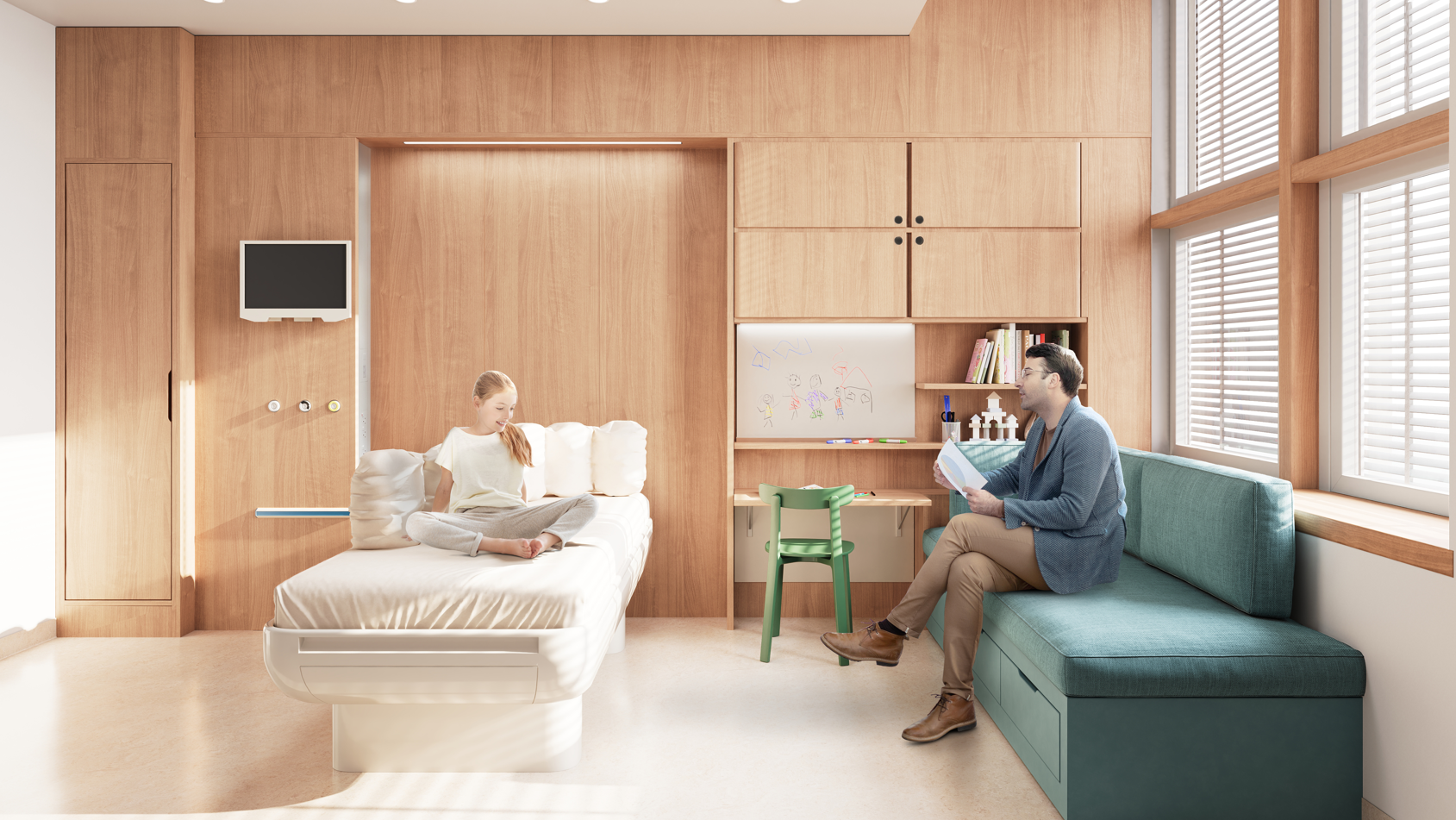
Our interior strategy extends this thinking, using natural materials with low carbon footprints to support both human and planetary health. Warm timber finishes and tactile surfaces reflect the ‘home-from-home’ aspirations that many families express, while also delivering on biophilic principles.

Cambridge Children’s Hospital stands as a testament to what is possible when design is deeply informed by empathy, evidence, and collaboration. By integrating physical and mental healthcare within a single, thoughtfully designed environment, we are not only addressing the immediate needs of young patients but also setting a new standard for holistic, child-centric care. This project exemplifies how architecture can transcend traditional boundaries, fostering environments that heal, inspire, and empower.

The Cambridge Children’s Hospital has been designed in partnership with Hawkins\ Brown and Ramboll.

This article was first published in the New London Quarterly #63. 
Interested in learning more? Get in touch!

Lienelle Geldenhuys

Lienelle Geldenhuys

Associate Director

London

+44 750 751 55 04

Please share!