Forest Chapel in Falkenberg

Forest Chapel in Falkenberg

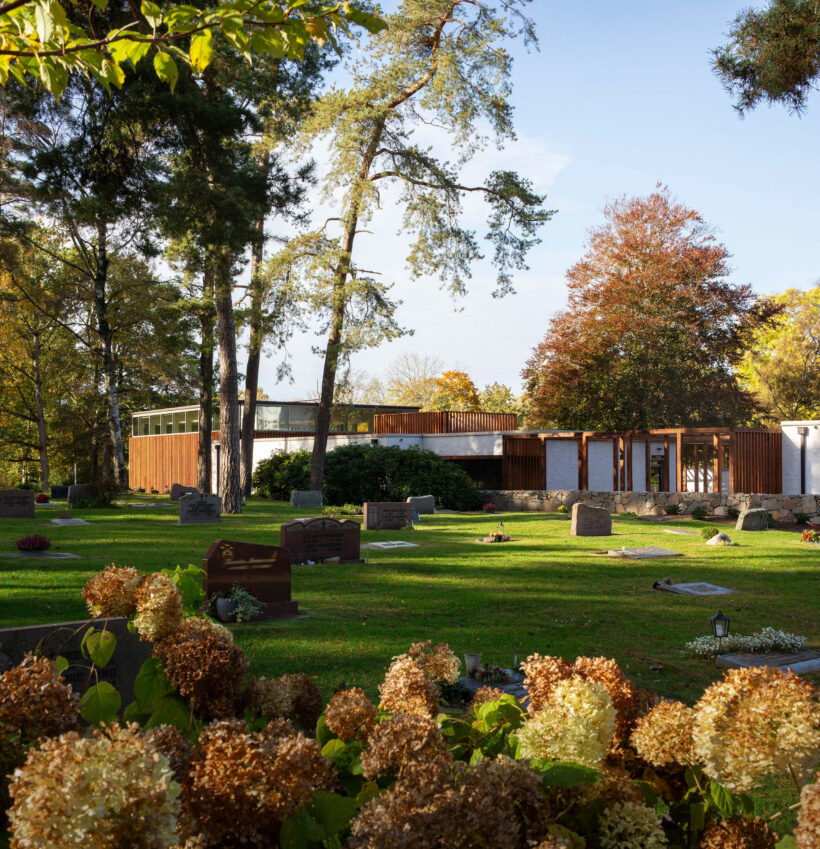
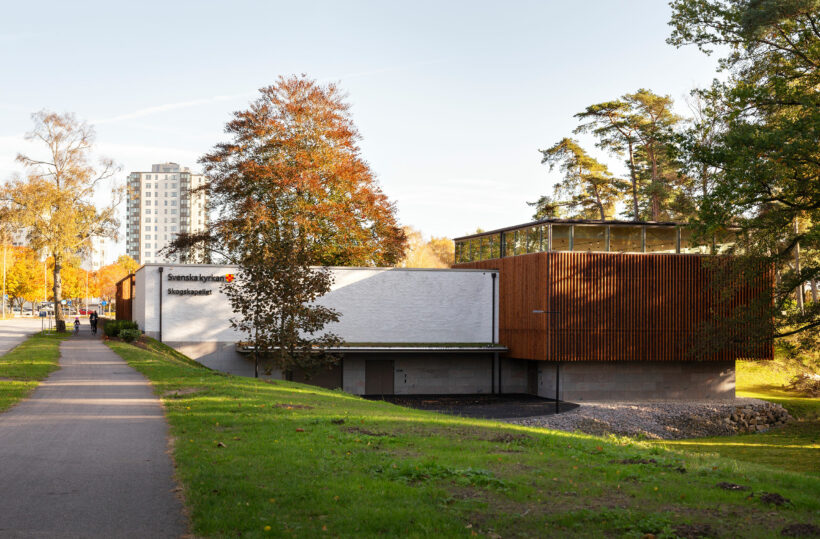
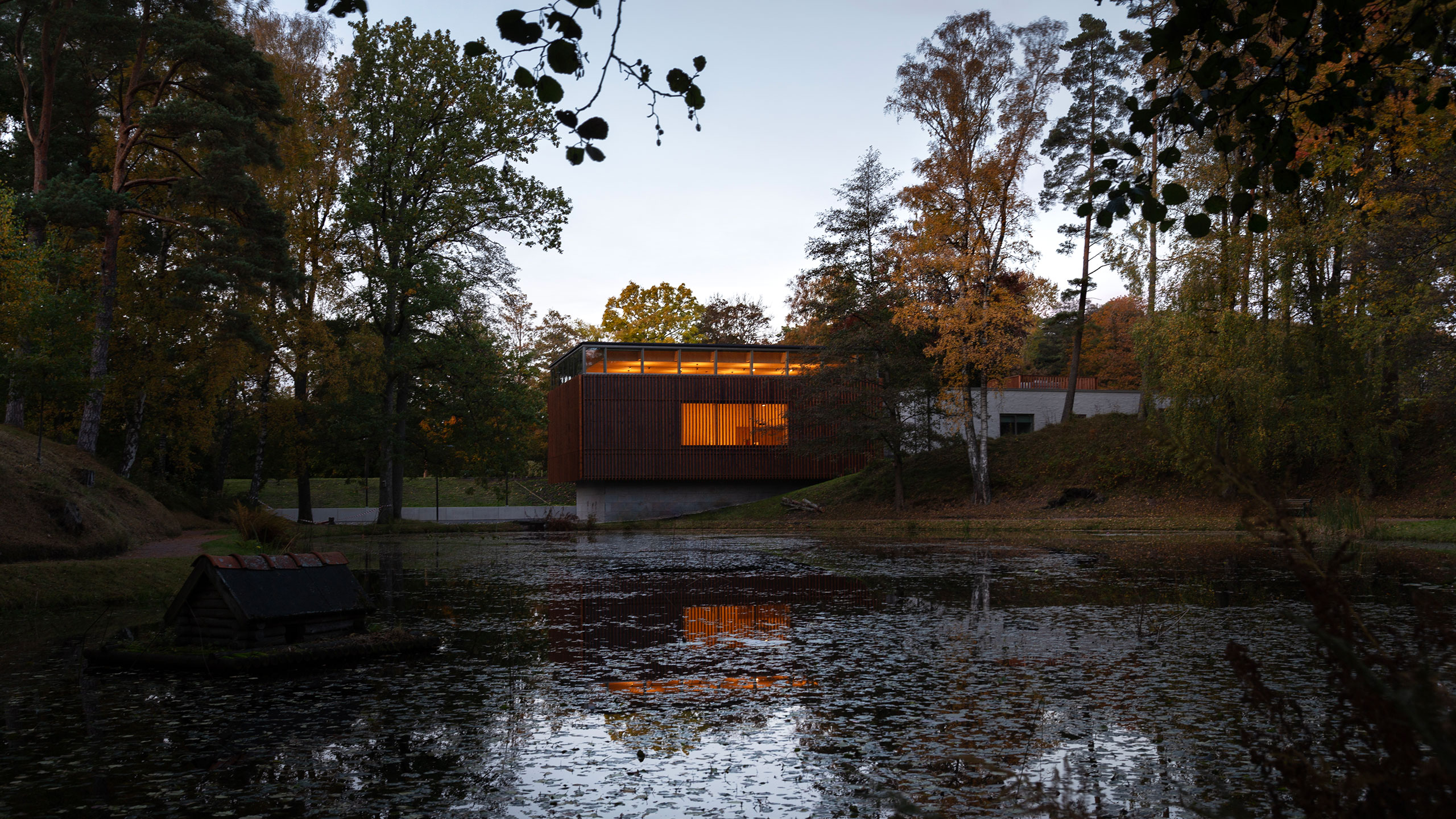
The Forest Chapel, the new faith-neutral ceremonial building of Falkenberg’s parish, is carefully nestled in the existing landscape of the Forest Cemetery. With a sensitive design approach that honors the unique qualities of the site, the new building provides visitors, loved ones and staff with spaces for reverence and reflection. Natural materials and landscape elements create a harmonious atmosphere and anchor the new ceremonial building in the landscape.

Site-specific architecture in harmony with the landscape

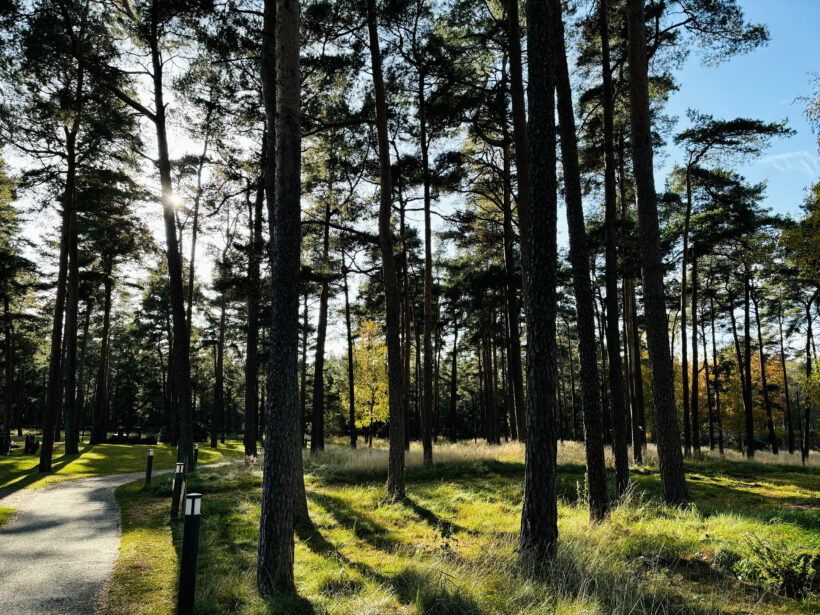
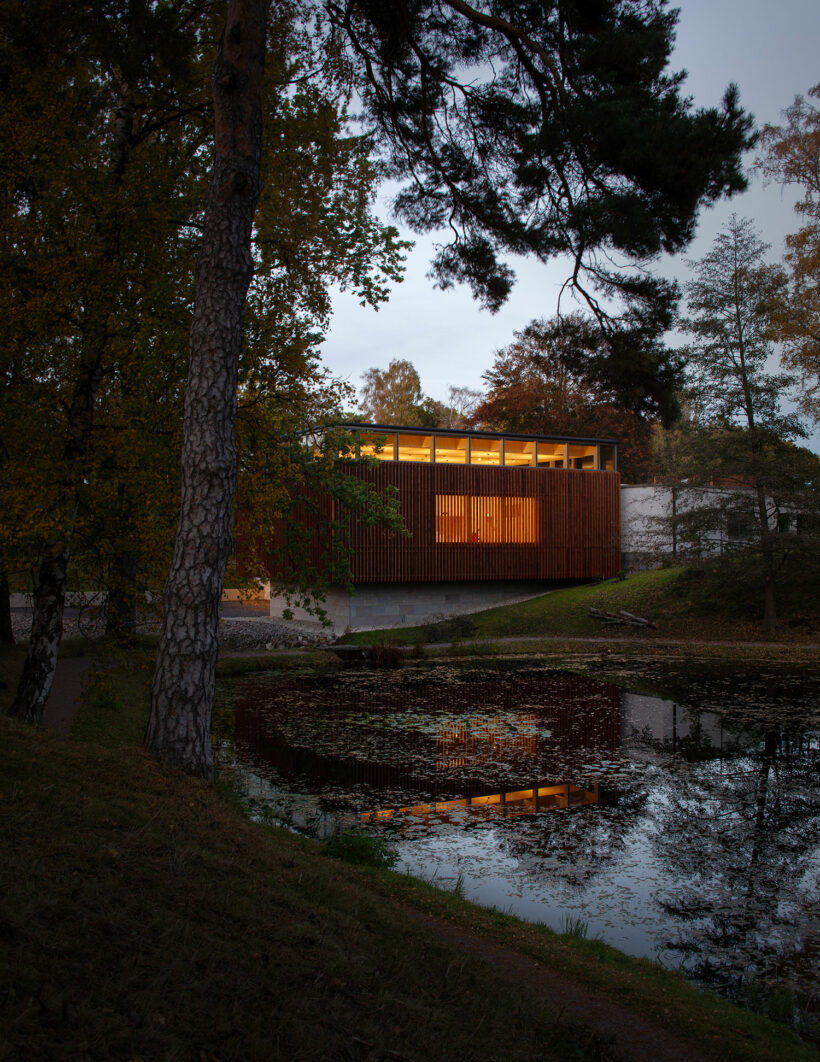
The varied landscape of the Forest Cemetery, with its towering trees, a large pond, and undulating topography, creates a unique context for the building. The Forest Chapel allows for reverent gatherings in an environment shaped by respect and care. The building contains three ceremonial spaces, operational spaces and a mortuary and is designed to allow all the functions to coexist simultaneously. Close collaboration between the building and landscape architects as well as a close dialogue with the client have been crucial for both the creative process and the overall design.

The design of the Forest Chapel is the result of an architectural competition announced by Falkenberg’s parish in the fall of 2021. Our interdisciplinary team, consisting of architects, landscape architects, and sustainability experts, won the competition with a proposal that both honors site’s unique qualities and meets the program’s functional requirements.
Client:  Svenska Kyrkan, Falkenbergs Pastorat
Location: Falkenberg, Sweden
Status: Completed 2024
Area: GFA ceremonial building and mortuary, approx. 1,400 sqm; landscape approx. 12,000 sqm
Contractor: HA Bygg
Awards: Falkenberg Municipality Architecture Award 2025, The Swedish Wood Protection Award 2025
Photo: Henrik Rosenkvist

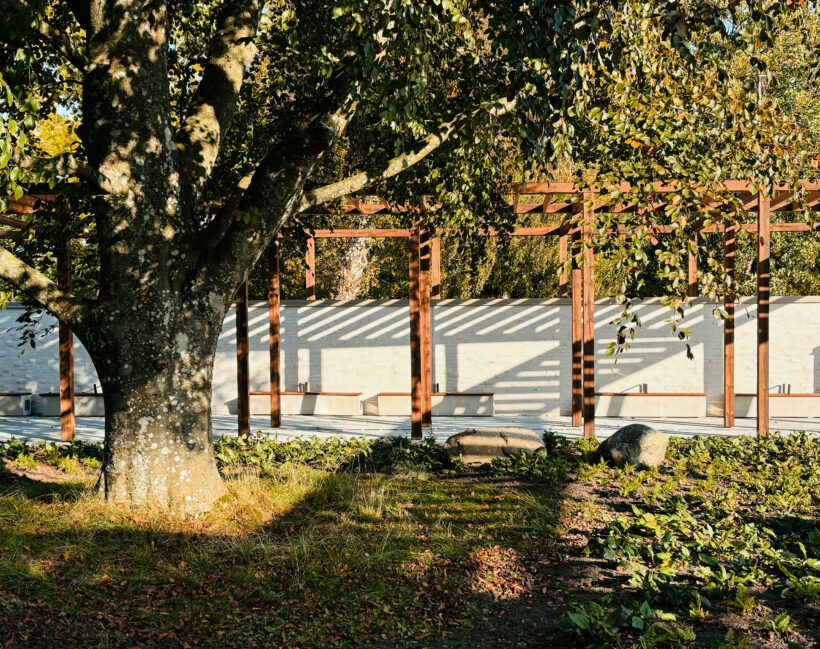
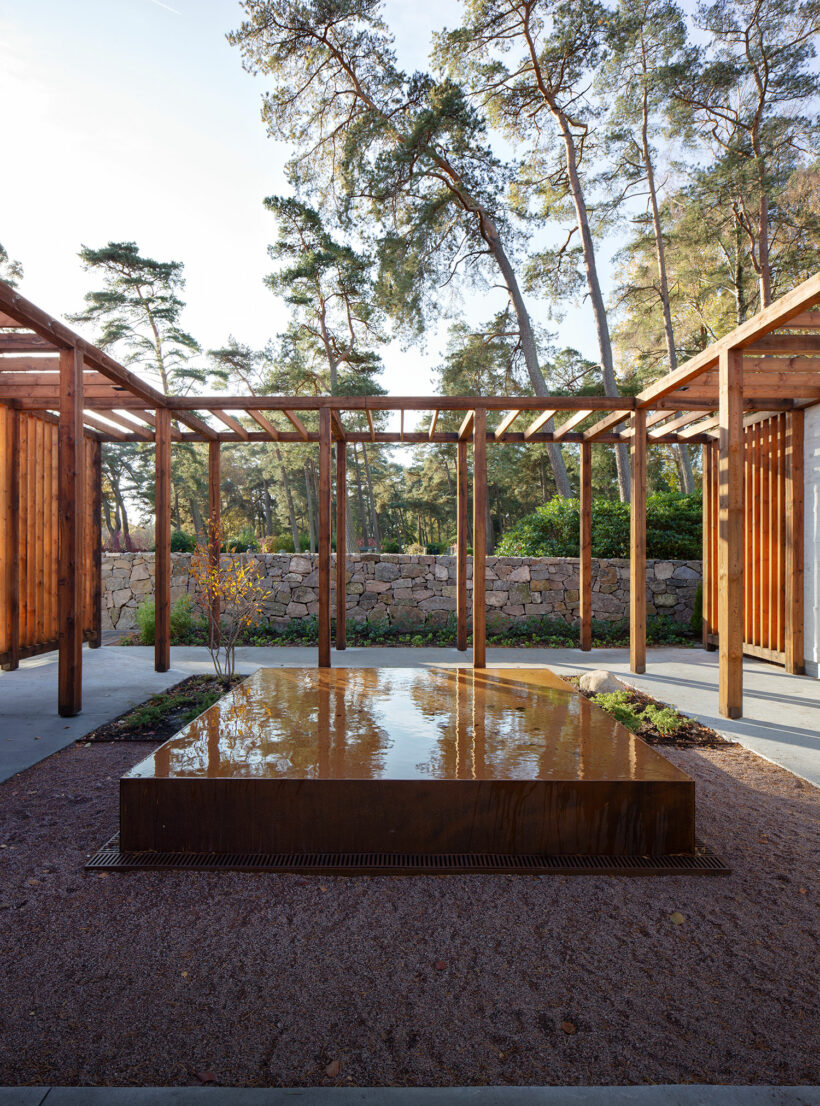
Each visitor on their way to a ceremony embarks on their own inner journey. We created spaces for pause and reflection on the way to the ceremonial rooms in the form of two outdoor courtyards– one featuring a century-old copper beech tree and the other a calm reflecting pool.
Michelle Bengtsson, Lead Architect

Design principles in balance

The design of the new Forest Chapel has evolved out of the existing qualities of the site and the
specific program needs. The shared vision – to create space for pause and reflection in the
moment of farewell – is expressed through three equally important and balanced design principles:
dignity, efficient logistics, and sustainability. These have guided the project from concept to
completion, forming a cohesive and harmonious whole where architecture and landscape meet.

Dignity and ceremonies for all beliefs

The Forest Chapel creates a dignified experience for visitors and enables ceremonies for all
beliefs. Most people coming for a funeral need some time and space to pause and reflect upon
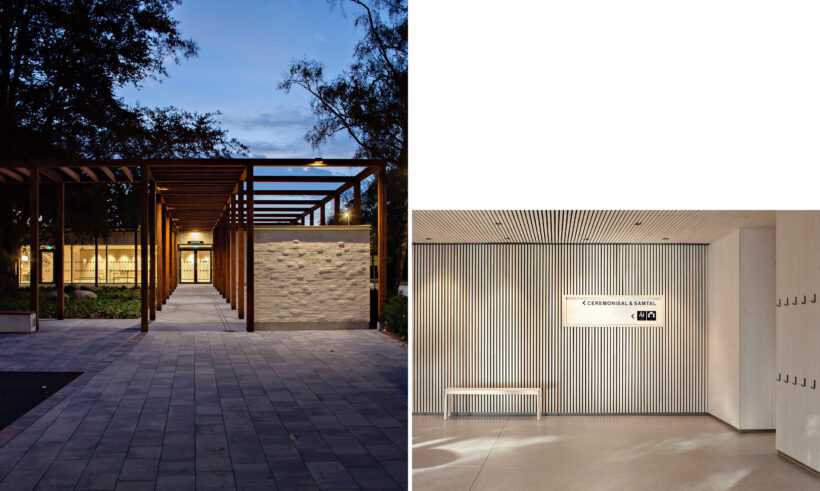
their thoughts, alone or in the company of others. Upon arrival by bike, bus or car, visitors are led
through a forested landscape that gently guides them toward the ceremonial building. They are
then met by two courtyards: one featuring a stately, hundred-year-old copper beech tree in front of
the main ceremonial hall, and another with a reflecting pool in cortén steel by the viewing room.
The copper beech tree enhances the feeling of being in the stillness of the forest, creating a calm
and inviting entrance to the largest of the three ceremonial rooms. The reflecting pool by the
viewing room captures and reflects part of the sky, adding another dimension of tranquility and
connection to nature.

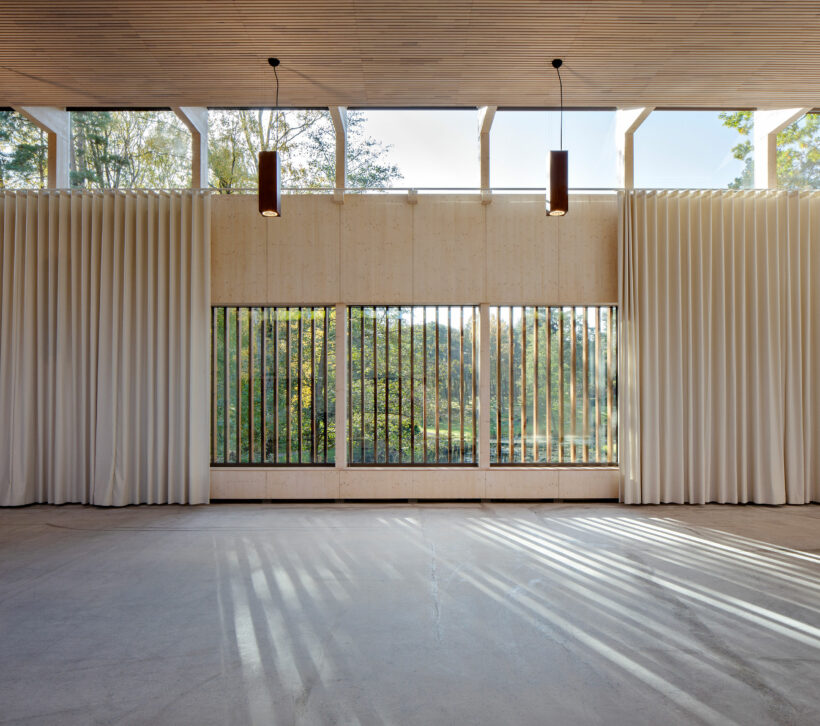
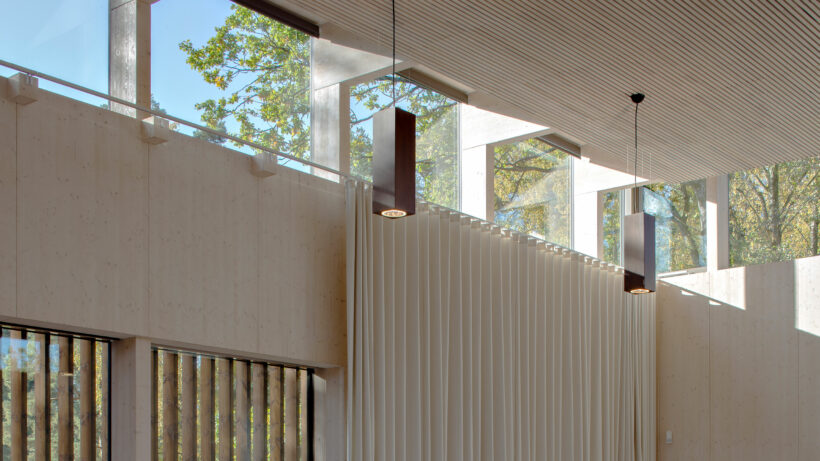
Each ceremonial space opens towards the surrounding landscape through carefully placed
windows and skylights. A continuous clerestory runs along the ceiling of the main ceremonial
space, allowing daylight and glimpses of treetops and sky from alla positions within the room. A
strategically placed window with wooden slats faces the pond, framing the landscape without
distracting from the ceremony. Custom-designed pendant lights in wood along the window band
lower the scale of the space, creating a more intimate atmosphere.

The ritual cleansing space is simple yet thoughtfully designed, inspired by study visits and
conversations with religious associations. A generous skylight brings soft daylight to the
entrance, and the material palette – warm tones in water-resistant surfaces – contributes to a
sense of serenity and respect. The deceased is illuminated by light from above upon entry and
exit, enhancing the reverent atmosphere of the space.

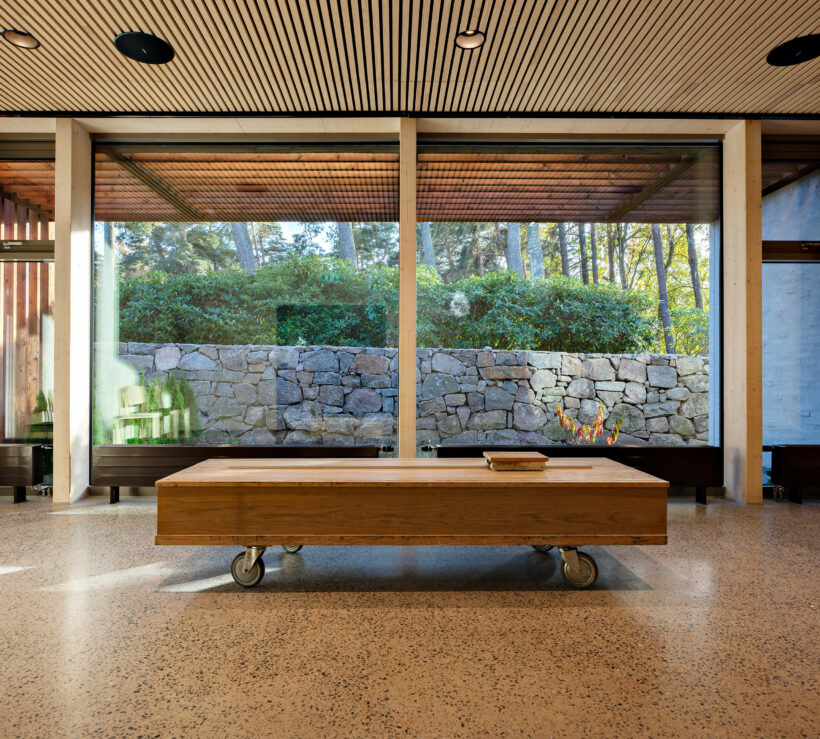
The ceremonial rooms are minimalist and are defined by natural materials – wood, brick and stone
– allowing the ceremony to be in focus. Nature enhances the experience — through light openings,
views, and materials — creating a neutral foundation for ceremonies of all faiths.

Logistics: functional and future-proof premises

The Forest Chapel is built on a sloping site, separating the flow of visitors to ceremonies on the
first floor from logistics and handling of coffins in the basement. The ceremonial and viewing
rooms are linked by a centrally placed service core connected directly to the lower level – a
technically complex solution that ensures smooth operation and dignity in every aspect.

Efficient logistics improve the working environment for staff and external collaborators such as
funeral agencies, flower deliveries, etc. Smooth flows and ample maneuvering space for coffins
are not only a prerequisite for a good working environment but also contribute to dignified handling
of the deceased.

The mortuary facilities are dimensioned to accommodate future needs, ensuring long-term
resilience. Energy-efficient refrigeration units replace traditional cold rooms, enabling scalable and
moisture-safe operation.

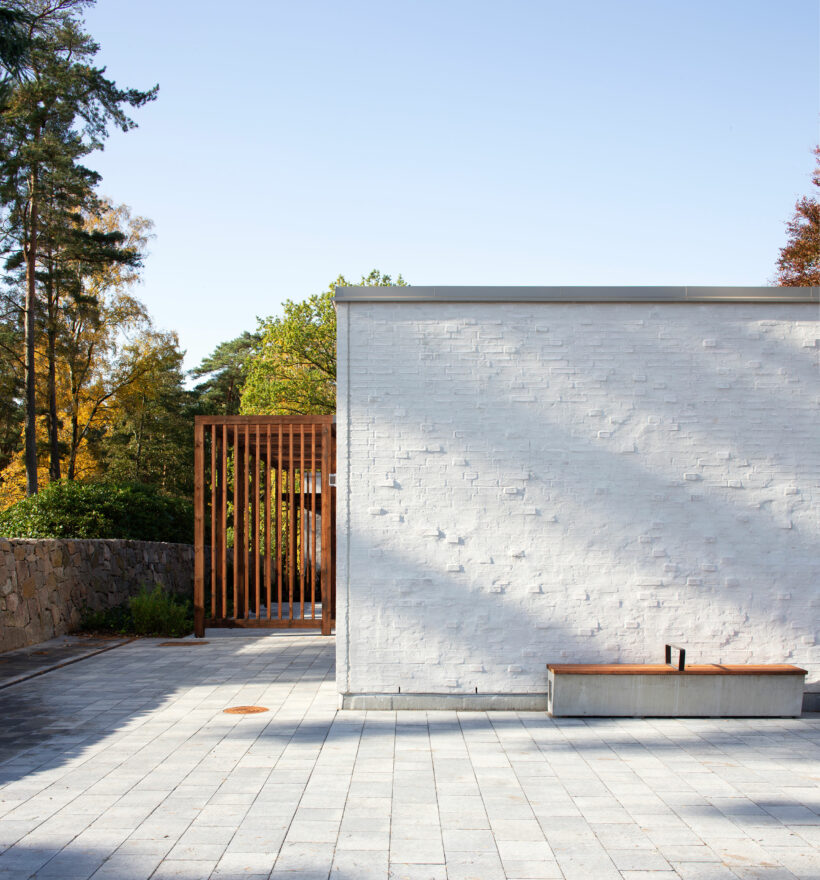
The ritual cleansing space is located in a separate building with a half-hidden entrance due to sensitive logistics but is visually connected to the rest of the ceremonial building via the viewing rooms’ wooden pergola and courtyard. The drivable area around the ritual cleansing space is also used as a gathering place, with benches along the facade. Adjacent to it is the flower garden, designed with a ground surface that reflects the character of the forest – with pines, heather, and rhododendrons – and is easily accessible to all visitors at the Forest Cemetery.

Sustainability: climate-neutral material choices with long-term management

Sustainability has been integral to the design, ensuring flexibility and long-term stewardship for the Church of Sweden. Early in the process, the decision was made to preserve the century-old copper beech tree at the heart of the site. Though this required careful coordination during construction, the effort became symbolic of the project’s values – protecting what is precious, both ecologically and spiritually. The tree enriches the experience of the place while providing vital ecosystem services and carbon capture.

The building’s structure above ground is primarily timber, complemented by brick and natural stone. All roofs except that of the ceremonial hall are covered with sedum. The material palette is earthy – wood, brick, and natural stone – to harmonize with nature and create a tactile experience. In the evening, especially during the dark season, the lantern-like clerestory around the main ceremonial space glows softly among the trees – a beacon in the forest, and a new landmark for Falkenberg.

Preserving as much of the existing nature and mature trees as possible has been central to creating a place of dignity on the site.
Anna Melin, Lead Landscape Architect

Contact & Team

Michelle Bengtsson

Lead Architect

Anna Melin

Lead Landscape Architect

Erika P Tegvald

Viktor Melin

Hampus Åvall

Sofie Stagnebo

Vitaliya Mokhava

Josef Abrahamsson

Rebecca Ekenberg

Meimei Montan

Please share!

Related projects

All Projects

Loading...