The Library Became a Maternity Ward at the Central Hospital in Karlstad

What happens when books and art are replaced by expectant families, nitrous oxide, and bathtubs? In Karlstad, a temporary maternity ward is being set up for expectant mothers in Värmland, as part of the development of the Central Hospital in Karlstad (CSK). The fact that a building once filled with knowledge and culture is becoming a place for the beginning of life has more than just symbolic value – it is also a concrete expression of how to use existing resources wisely, and how to collaborate to create ultimate solutions in one of Sweden’s largest healthcare construction projects.

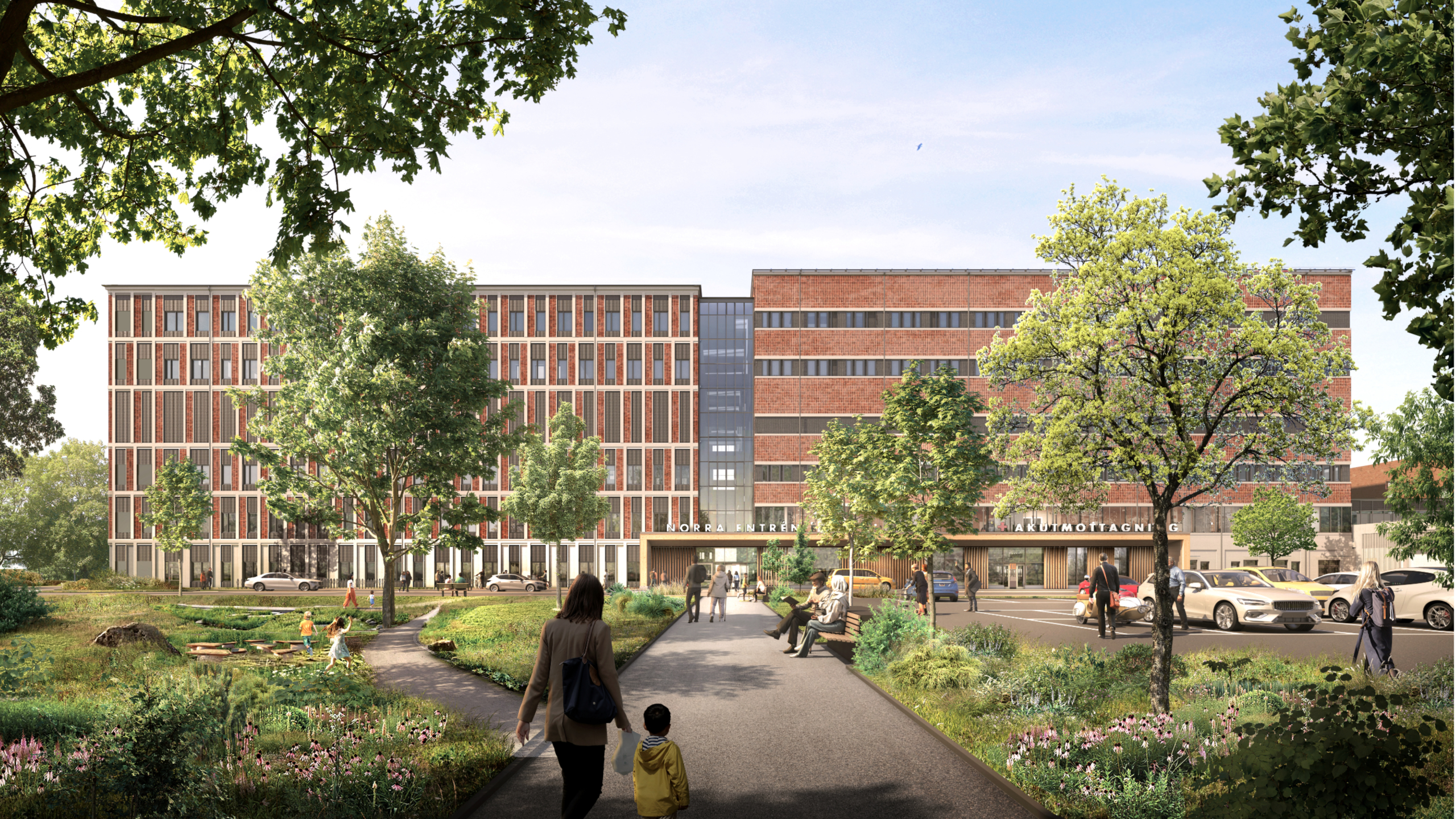
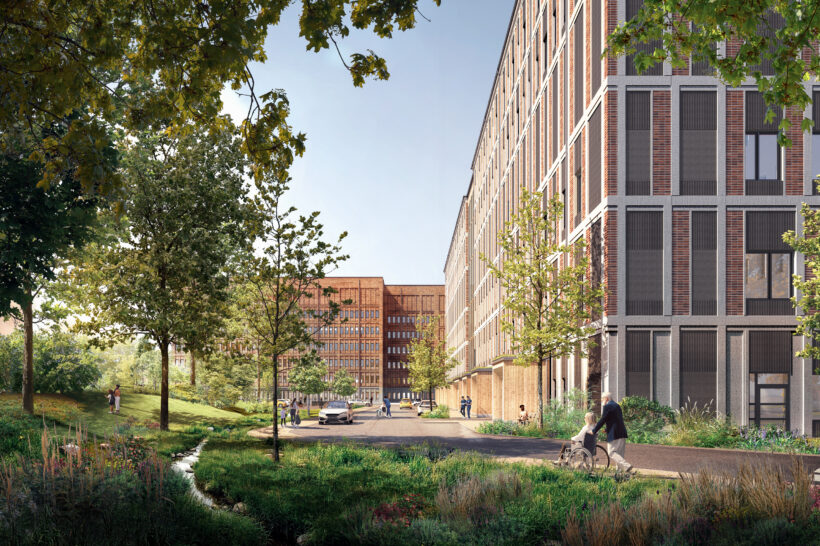
The development of the Central Hospital in Karlstad (CSK) requires a great deal of creativity to navigate the logistical challenges needed to continue providing care while almost the whole hospital area is rebuilt. In total, 110,000 square meters will be built, 14,000 square meters will be renovated, and 40,000 square meters will be demolished – making it one of Sweden’s largest hospital development projects.

Making use of existing buildings is a top priority, and is affecting the hospital’s maternity services, which will move into temporary facilities in 2026 before making a permanent move to the Emergency Care Centre in a few years.

Krister Nilsson, lead architect with responsibility for the clinical planning in the project, has over 25 years of experience in healthcare architecture. He describes how the project team had to ask themselves: where on the site are there just over 2,000 square meters available between 2026 and 2033 that could accommodate a temporary maternity ward? The answer lay in the hospital’s library and art gallery, which were built in the 1970s and have served as an important cultural asset for staff, visitors and patients.
It is a symbolically beautiful and appealing idea for a maternity ward to be housed in a building that has long been a bastion of knowledge and art. At the same time, the premises place high demands on prioritization and creative planning, since they were not originally designed for healthcare operations.
Krister Nilsson, lead architect with responsibility for the clinical planning, White Arkitekter

Swedish hospital buildings are often long and narrow, designed to allow light to reach as many rooms as possible. The library’s square shape made it difficult to bring natural light into all areas. For this reason, priority was given to make use of natural light in delivery rooms, patient rooms, and staff workstations, while other rooms are supplemented with artificial lighting that mimics skylights.

Safe spaces in a technically challenging environment
Although the building already exists, design is a top priority. It is important that the rooms convey a sense of calm to ensure a positive childbirth experience – a factor that is increasingly influencing the design of these types of facilities, where new ideas are constantly being explored. To create a safe and calm atmosphere, technical equipment is concealed behind wooden cabinetry – a building material known for its soothing properties. At the same time, beautiful glass panels and wooden elements from the library are preserved in the waiting rooms and common areas to create a sense of familiarity and warmth within the building.

Directly below the maternity ward are the hospital’s central kitchen and a technical services centre. This means that any installation work and drilling must be carefully coordinated to not disrupt food deliveries or operations.

This is a good example of how a renovation project is often more complex than a new construction project. Here, we need to take existing constraints related to traffic flow, hygiene, and safety into account while ensuring that operations can continue without interruption. It is also an example of how important the organisation’s involvement is in creating optimal solutions.
Krister Nilsson, lead architect with responsibility for the clinical planning, White Arkitekter

A well-planned process
Throughout the development of CSK, the staff has been involved at every stage – from the floorplan to the detailed design of each room, right down to the placement of furnishings and equipment. The close dialogue between architects, technical consultants, the contractor Skanska, and hospital staff has been crucial, both for creating a functional, safe and efficient healthcare environment and for fostering pride and commitment over time.

The process of building consensus is particularly important in these types of large-scale development projects, especially since the project spans over such a long period that some employees will not work in the new facilities until several years after the initial planning decisions are made. Others will never use them at all. To maintain commitment and trust, a strong focus on building consensus, documentation, dialogue, and ensuring that knowledge is passed on among colleagues over time is required.

About the project

The temporary maternity ward at Nya CSK covers 2,200 square meters and handles approximately 2,250 births annually, of which about 500 are by caesarean section. It features nine delivery rooms, specialized prenatal care, and an ultrasound clinic. Since an increasing number of women are requesting water births, the possibility of installing bathtubs in every delivery room was considered; however, due to limited space and technical constraints, it was decided to equip only two of the rooms with bathtubs.

Due to limited space, shared use has been a key factor: examination rooms are used for multiple activities throughout the day, and some rooms are equipped with combination beds that serve both as an obstetric chair and a bed. This type of flexibility is also valuable for future care needs, helping to create solutions that will ensure effective care for many years to come.

White Arkitekter’s extensive and deep expertise in healthcare architecture have provided the firm with valuable insights into how needs evolve over time. This plays a crucial role in the entire CSK project. CSK will serve as a hub for specialist and emergency care in Region Värmland, and will be the largest of three hospitals in a county with 283,000 residents. When the project is completed, it will represent half a century of healthcare development. Through close collaboration between Region Värmland, White Arkitekter, and Skanska, the result is taking shape and will serve as a guiding light for healthcare architecture for many years to come.

Contact person

Krister Nilsson

Krister Nilsson

Architect

Göteborg

+46 31 60 86 97

Please share!