In Osnabrück, a new campus is planned that brings together a Montessori school for pupils with intellectual disabilities and the Anne Frank School for pupils with physical disabilities on a shared site. The project creates a cohesive learning and living environment for pupils with physical and intellectual disabilities, combining a clear structure with carefully designed spatial qualities.
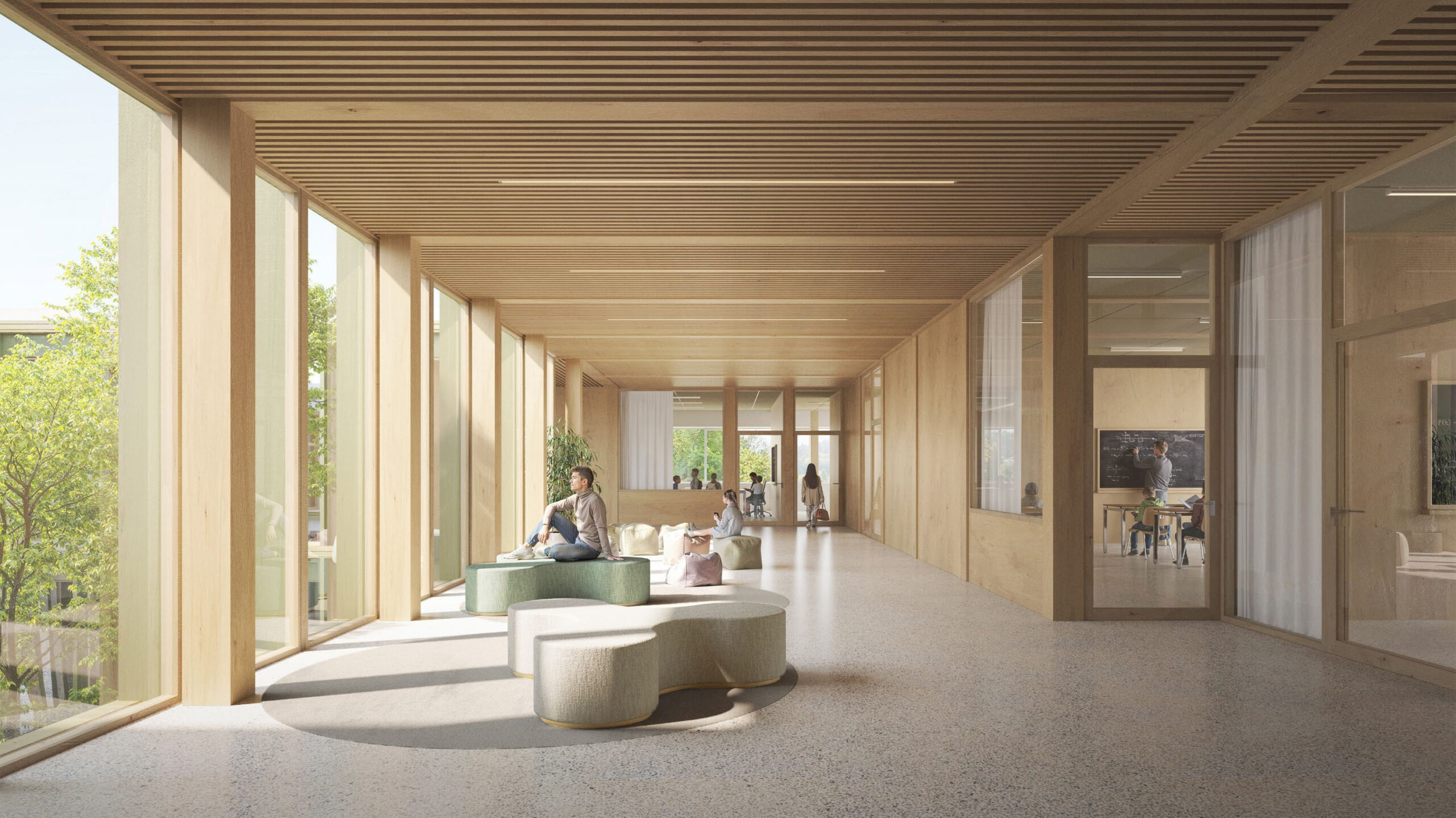
White awarded second prize for inclusive school campus in Osnabrück
We are proud that our competition entry for a new school campus for pupils with physical and intellectual disabilities in Osnabrück has been awarded second prize. Developed in collaboration with HPP Architekten, the proposal combines ambitious sustainability goals with a strong focus on meeting the pupils’ specific needs in a considered and sensitive way.
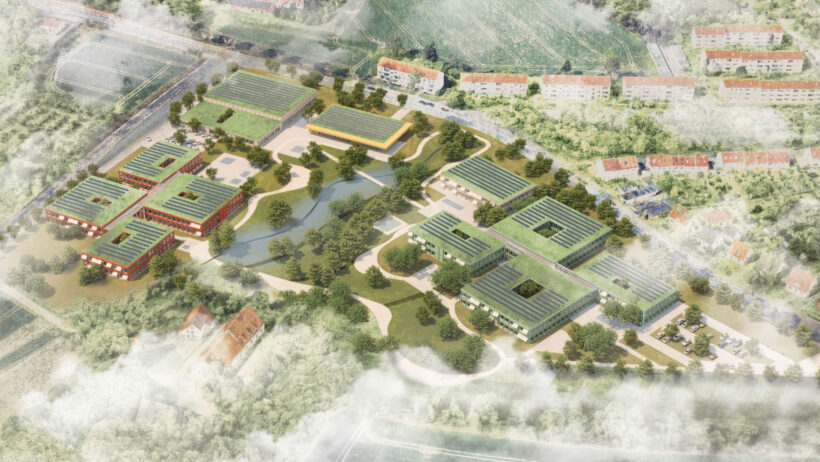
The campus is organised around a shared centre with a canteen, sports hall and creative facilities, forming a social meeting place for both schools. The buildings are low-rise and compact, positioned with regard to both the urban context and local climatic conditions. New pedestrian and cycle connections link the site to surrounding neighbourhoods, while the outdoor environments are made accessible to local residents as well.
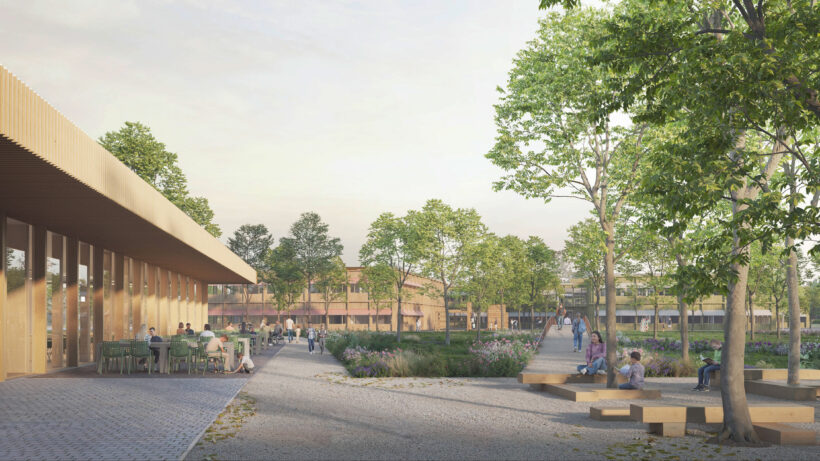
The architecture creates identity through both structure and materiality. Each building has its own colour palette to support orientation and a sense of belonging: the Montessori school is expressed in green, nature-inspired tones, the Anne Frank School in warm red hues, and the shared buildings in timber and natural colours.
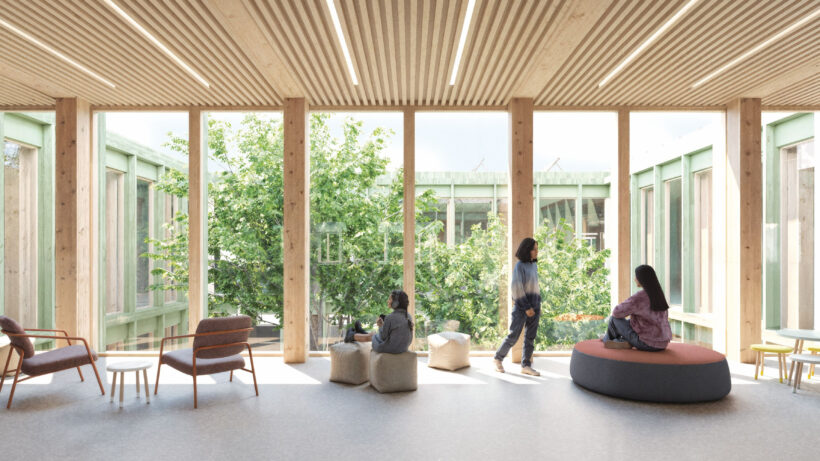
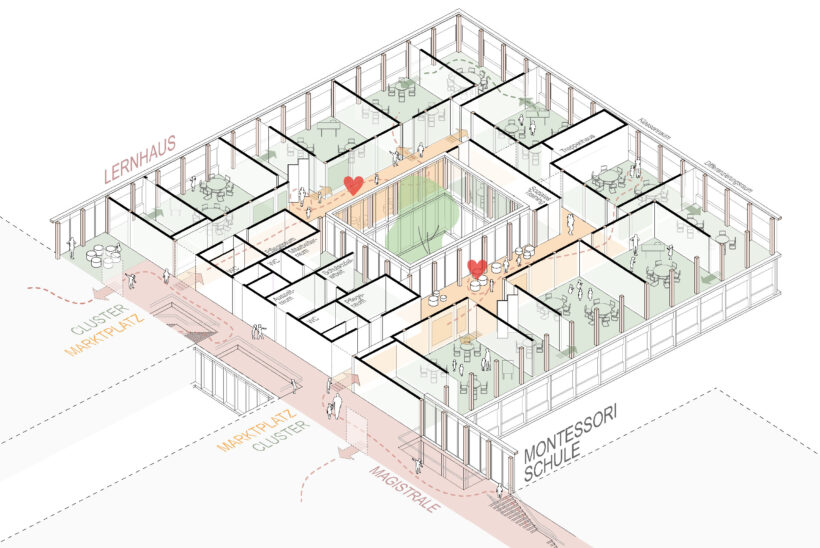
The façades are characterised by a clear rhythm, with timber as the primary material. Internally, wood dominates in doors, window reveals, wall linings and fixed furniture. Light surfaces, subdued colours and carefully placed accents contribute to a calm atmosphere, good orientation and favourable acoustics. The interior environments are designed to adapt to different needs – from open shared spaces to more secluded rooms for retreat. Classrooms can be both bright and fully screened, which is particularly important for pupils who are sensitive to external stimuli. Movable walls allow for flexible group sizes, while clearly defined retreat spaces are always available.

The outdoor environments play a central role in the project. A continuous activity route connects play, learning and movement within a green, inclusive setting.
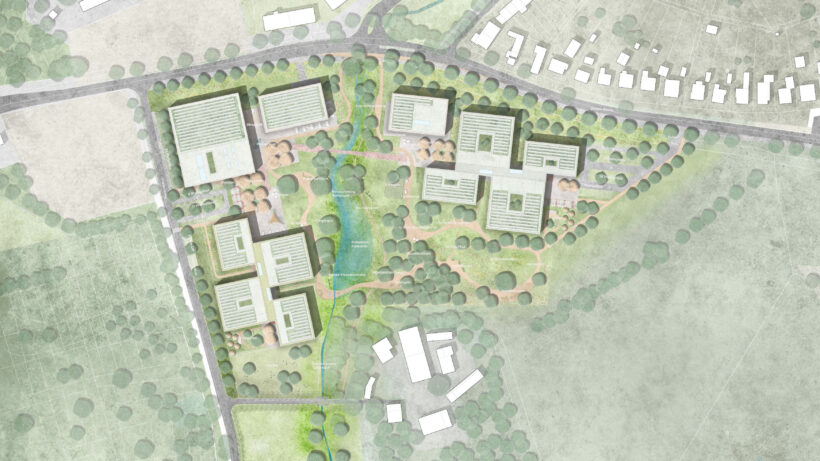
With a strong focus on sustainability, the campus is planned to meet the Passivhaus standard, incorporating energy-efficient systems, local stormwater management and the potential for on-site electricity generation through solar panels. The project demonstrates how architecture, pedagogy and landscape can work together to create long-term sustainable school environments with high social value.
Interested in learning more? Get in touch!
