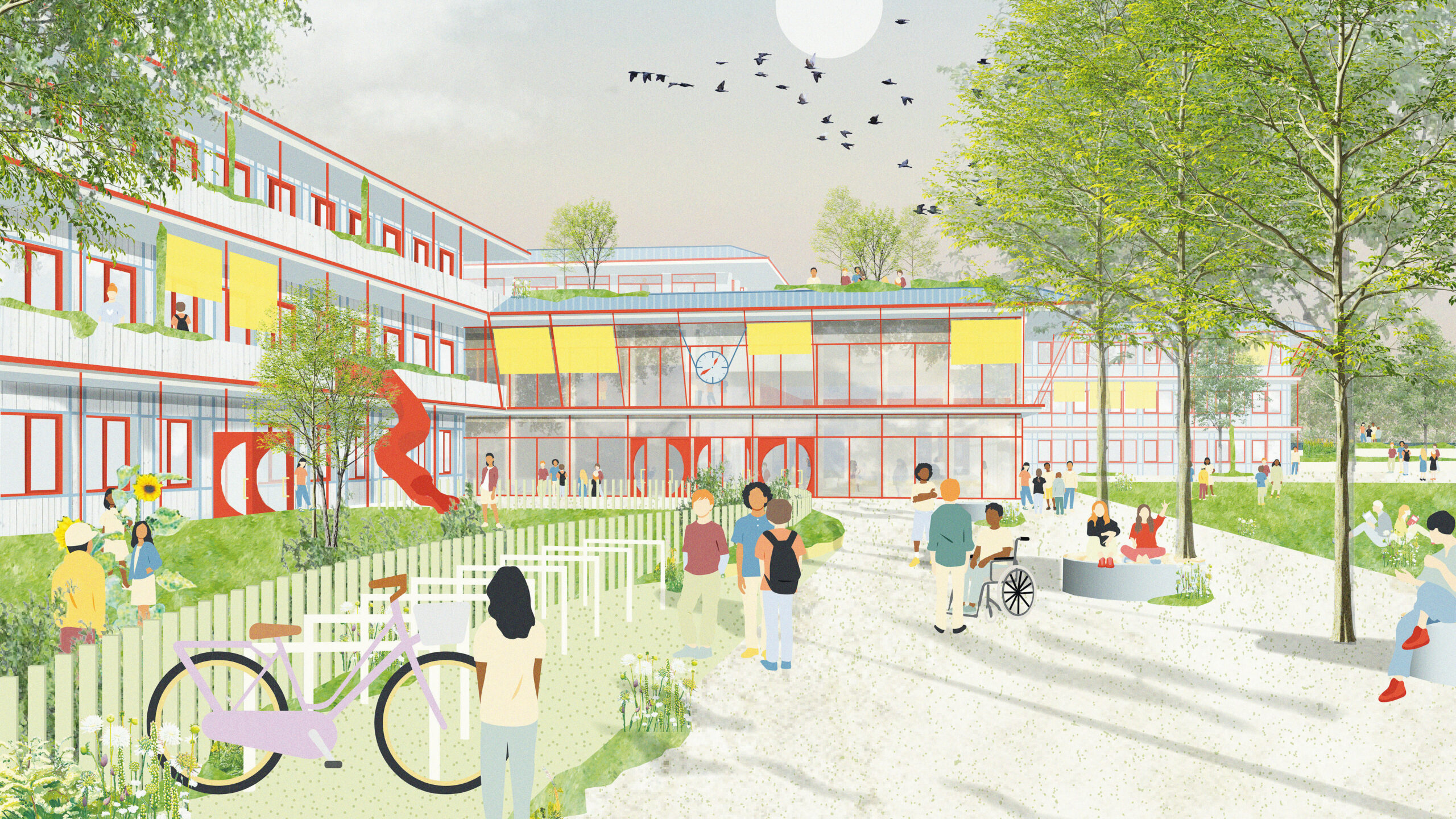
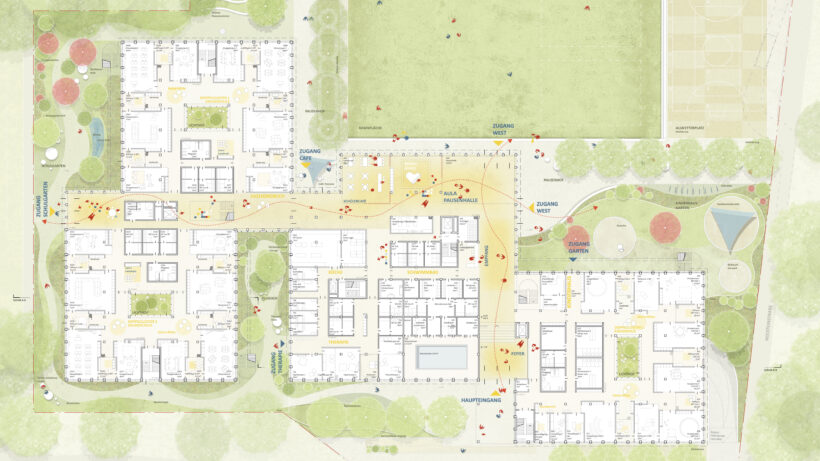
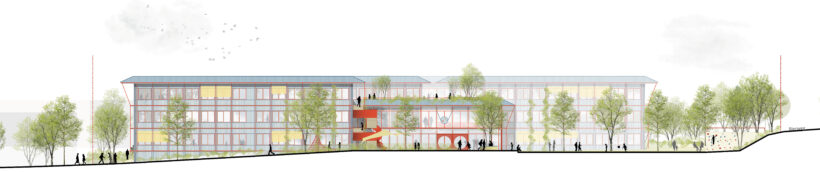
Set in a scenic landscape between the towns of Senden and Wullenstetten, the new building is positioned towards the street while opening up to the surrounding countryside. The building is organised into three clear parts: one for older children and youth, one for younger children, and a shared section housing administration, therapy, sports and communal areas. The three volumes are slightly offset from one another, creating courtyards, gardens and play areas that encourage both activity and calm.
White Arkitekter proposes a new school centred on inclusion and play
Lebenshilfe Donau-Iller invited architects to design the new Heilpädagogische Zentrum in Senden, Germany – a school for children and young people with disabilities. White Arkitekter proposed a design that promotes community and inclusion within a stimulating environment that inspires play and movement.
Architecture that fosters community
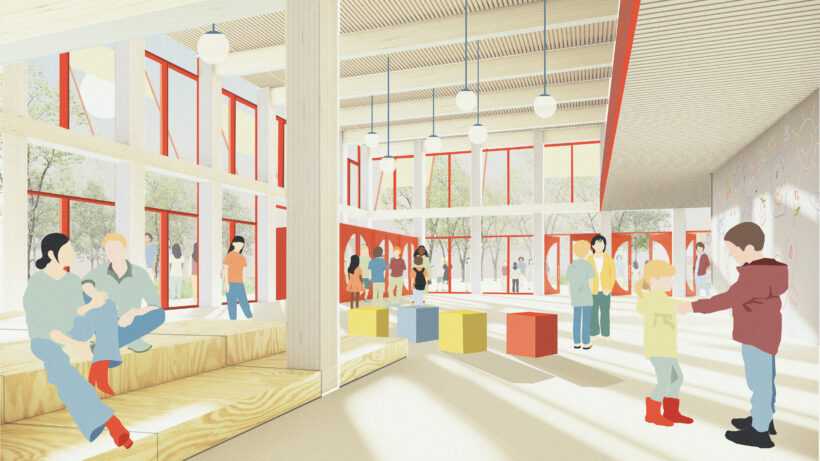
The central placement of shared functions defines the design, creating efficient circulation and close connections for everyday life. At its heart lies a bright, double-height hall that opens onto the courtyard, blurring the boundary between indoors and outdoors. The hall serves as a flexible gathering space for performances, music, meetings and everyday interaction. From here, generous corridors lead to the different school and childcare sections, doubling as social spaces.
Strong spatial connections between inside and outside characterise the design. On the roof, a creative garden with workshops and a student café brings life to the upper levels, while the younger children have their own garden with varied play environments. Therapy rooms, the sports hall and the dining area are placed close together to support good logistics.
A setting for activity and recovery
The outdoor environment is designed with both active and quiet zones, each with its own character and purpose. Grassy areas and all-weather courts are used for play, sports and events, while gardens, orchards and shaded seating areas provide spaces for rest and reflection.
The active zones feature clear, linear structures that encourage movement. A slightly recessed lawn functions as both a play and event field as well as a retention area for rainwater. Adjacent to it lies a multifunctional area used for sports and as a temporary drop-off and pick-up space for minibuses.
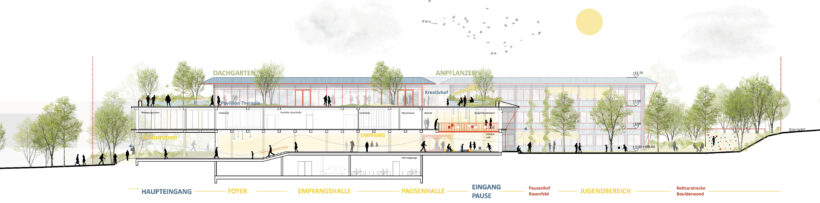
The quieter zones have a softer, organic character that allows for privacy and rest in a natural setting – with a pond, orchard, shaded seating and an outdoor classroom. Therapeutic walking paths promote gentle movement and orientation. The green roofs add more spaces for relaxation and learning, including terraces, planting areas and secluded spots adjacent to therapy rooms and the student café.
Although we did not win this time, we are very proud of our proposal and warmly congratulate Atelier 30 on being awarded first prize in the competition.
Contact person
